
Online Learning Platforms in 2026: Comparing 3 Top Options for Adult Education
The landscape of education is continuously evolving, and by 2026, online learning platforms have solidified their position as indispensable tools for adult education. With an ever-increasing demand for upskilling, reskilling, and lifelong learning, choosing the right platform can significantly impact one’s career trajectory and personal development. This article delves into a detailed comparison of three leading online learning platforms: Coursera, edX, and LinkedIn Learning, offering insights into their unique strengths, target audiences, and what makes them stand out in the competitive e-learning market.
As professionals navigate a rapidly changing job market, the ability to acquire new skills flexibly and efficiently has become paramount. These platforms are not just repositories of courses; they are ecosystems designed to foster continuous growth, connect learners with industry experts, and often provide credentials that hold real-world value. Our focus will be on identifying which platform best suits various adult learning needs, from academic pursuits to professional certifications and practical skill enhancement.
The Evolution of Online Learning Platforms for Adults
Before we dive into the specifics of each platform, it’s crucial to understand the broader context. The concept of online learning platforms has moved far beyond simple video lectures. Today, they incorporate interactive assignments, peer-graded projects, live sessions with instructors, capstone projects, and robust community features. This evolution is particularly beneficial for adult learners who often juggle work, family, and other commitments, requiring flexible yet effective learning solutions.
Adult education, in particular, benefits from the asynchronous and self-paced nature that many of these platforms offer. This allows learners to integrate education seamlessly into their existing routines, learning at their own pace and on their own schedule. Furthermore, the proliferation of micro-credentials, specializations, and professional certificates offered by these platforms addresses the immediate need for specific, job-relevant skills, making them highly attractive to employers.
The year 2026 finds these platforms leveraging advanced AI for personalized learning paths, enhanced accessibility features, and more immersive learning experiences. The data analytics capabilities embedded within these platforms also allow for continuous improvement of course content and delivery methods, ensuring that learners receive the most relevant and up-to-date information.
Coursera: Academic Rigor Meets Professional Development
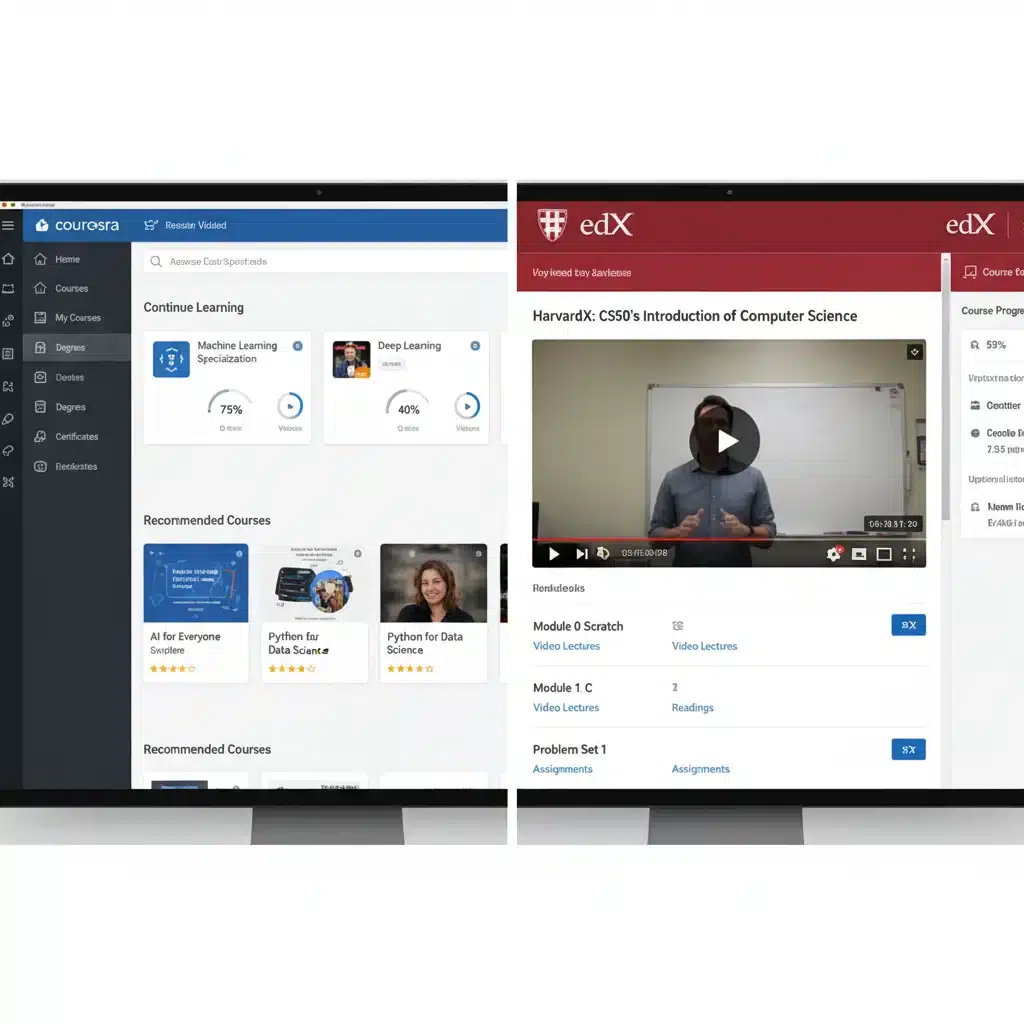
Coursera has established itself as a titan among online learning platforms, largely due to its strong partnerships with top universities and corporations worldwide. Founded by Stanford professors Andrew Ng and Daphne Koller, Coursera’s mission is to provide universal access to world-class education. By 2026, Coursera continues to expand its offerings, catering to a broad spectrum of adult learners seeking everything from foundational knowledge to advanced degrees.
Key Features and Offerings:
- Specializations and Professional Certificates: These structured learning paths combine several courses, culminating in a project or exam, and are designed to build specific career-relevant skills. Many are developed in partnership with leading companies like Google, IBM, and Meta, directly addressing industry demands.
- University Degrees: Coursera offers a growing number of fully online Bachelor’s and Master’s degrees from accredited universities, making higher education more accessible and affordable.
- Guided Projects: For those who prefer hands-on learning, guided projects offer bite-sized, interactive experiences where learners work on real-world tools and datasets with step-by-step guidance.
- Coursera for Business/Government: Tailored solutions for organizations looking to upskill their workforce, providing curated content and analytics for administrators.
- Global Community: A vibrant global community of learners facilitates peer-to-peer learning and networking opportunities.
Target Audience:
Coursera is ideal for adult learners who value academic credentials, structured learning paths, and industry-recognized certifications. It appeals to individuals looking to switch careers, advance within their current field, or even pursue a full degree online. The platform’s emphasis on quality content from reputable institutions makes it a go-to for those seeking a rigorous and credible online education experience.
Pros and Cons:
- Pros: High-quality content from renowned universities and companies, wide range of specializations and degrees, strong career-focused programs, flexible learning options, financial aid available.
- Cons: Can be expensive for individual courses or specializations without a subscription, degree programs require significant commitment, some courses may require a strong academic background.
By 2026, Coursera has further refined its AI-powered recommendation engine, ensuring that learners are matched with the most relevant courses and specializations based on their career goals and existing skill sets. Its commitment to bridging the gap between academic theory and practical application remains a cornerstone of its success.
edX: Open Education from Elite Institutions
Co-founded by Harvard University and MIT, edX stands as another formidable player in the realm of online learning platforms. Its ethos revolves around providing high-quality education to everyone, everywhere, regardless of their background or ability to pay. By 2026, edX continues to champion open education while also expanding its professional and degree-granting programs.
Key Features and Offerings:
- MicroBachelors and MicroMasters Programs: These innovative programs offer a stackable credential approach, allowing learners to earn university-recognized credits that can be applied towards a full Bachelor’s or Master’s degree. They are often more affordable and flexible than traditional degree pathways.
- Professional Certificate Programs: Similar to Coursera, edX offers professional certificates developed with universities and industry leaders, focusing on in-demand skills in fields like data science, cybersecurity, and business.
- XSeries Programs: A series of courses designed to provide a deep understanding of a specific subject area, often leading to a verified certificate.
- Free Audit Track: Many courses on edX can be audited for free, allowing learners to access course materials without paying, though they won’t receive a verified certificate or graded assignments.
- Global University Network: Partners with over 160 universities and institutions globally, offering a diverse range of subjects and perspectives.
Target Audience:
edX appeals to adult learners who seek the prestige and academic rigor of top-tier universities, often at a more accessible price point or even for free through the audit track. It’s particularly well-suited for those looking to explore new subjects, gain foundational knowledge, or earn university-backed credentials without the full commitment of a traditional degree. Professionals seeking to enhance their knowledge in specialized fields will also find its MicroMasters and Professional Certificate programs highly valuable.
Pros and Cons:
- Pros: Access to courses from Harvard, MIT, and other elite institutions; strong emphasis on open education; flexible MicroBachelors/MicroMasters programs; free audit option for many courses; diverse subject matter.
- Cons: Free audit track does not include graded assignments or certificates; some professional programs can still be costly; course availability can vary by institution.
In 2026, edX continues to innovate with its stackable credential model, making higher education more modular and responsive to the needs of the modern workforce. Its commitment to quality and accessibility ensures its continued relevance as a premier online learning platform.
LinkedIn Learning: Career-Focused Skill Development
LinkedIn Learning, formerly Lynda.com, stands out among online learning platforms for its strong integration with the professional networking giant, LinkedIn. This platform is singularly focused on professional development and career advancement, offering a vast library of courses taught by industry experts. By 2026, its synergy with LinkedIn profiles and job seeking features makes it an invaluable resource for professionals.
Key Features and Offerings:
- Extensive Course Library: Offers thousands of courses covering business, creative, and technology skills, from software tutorials to leadership training and marketing strategies.
- Personalized Recommendations: Leverages LinkedIn profile data to provide highly personalized course recommendations, helping users identify skills gaps and relevant learning paths.
- Learning Paths: Curated series of courses designed to help learners master a specific skill or prepare for a new role. Examples include ‘Become a Project Manager’ or ‘Advance Your Data Science Skills’.
- Integration with LinkedIn Profile: Certificates of completion can be easily added to a user’s LinkedIn profile, showcasing their newly acquired skills to potential employers and recruiters.
- Expert Instructors: Courses are taught by industry professionals with real-world experience, ensuring practical and relevant content.
- Offline Viewing: Allows learners to download courses and watch them offline, catering to busy professionals on the go.
Target Audience:
LinkedIn Learning is primarily designed for working professionals, job seekers, and organizations looking to upskill their employees. It’s perfect for individuals who want to acquire practical skills quickly, enhance their professional competencies, and boost their career prospects. Its seamless integration with the LinkedIn ecosystem makes it particularly attractive for networking and career advancement.

Pros and Cons:
- Pros: Highly relevant for career development, vast library of practical skills courses, strong integration with LinkedIn profiles, personalized recommendations, expert-led instruction, flexible subscription model.
- Cons: Less emphasis on academic degrees or university-level credentials, content can sometimes be less rigorous than university-partnered platforms, primarily subscription-based.
In 2026, LinkedIn Learning continues to be a crucial resource for career-driven individuals, offering a dynamic and responsive approach to professional education. Its ability to connect learning directly with career opportunities through the LinkedIn network remains its most significant differentiator among online learning platforms.
Comparative Analysis: Choosing Your Ideal Platform
When selecting an online learning platform, adult learners in 2026 must consider their specific goals, learning style, and budget. Here’s a comparative overview to help make an informed decision:
| Feature/Platform | Coursera | edX | LinkedIn Learning |
|---|---|---|---|
| Primary Focus | Academic & Professional Certificates, Degrees | University-level Courses, Micro-credentials, Open Education | Professional Skill Development, Career Advancement |
| Content Providers | Top Universities & Global Companies | Harvard, MIT & Other Elite Universities | Industry Experts & Professionals |
| Credentials Offered | Specializations, Professional Certificates, Degrees | Verified Certificates, MicroBachelors, MicroMasters, Degrees | Certificates of Completion |
| Pricing Model | Per course/specialization, subscription (Coursera Plus), degree fees | Per course (verified track), program fees, free audit option | Subscription-based (monthly/annually) |
| Learning Style Suitability | Structured, academic, project-based | Rigorous, self-paced, open access | Practical, hands-on, career-oriented |
| Best For | Career changers, degree seekers, those valuing academic credentials | Explorers, those seeking university-level content, flexible degree paths | Skill-building, career growth, professionals needing practical application |
Considerations for Adult Learners in 2026:
- Career Goals: Are you looking for a new job, a promotion, or to deepen expertise in your current role? LinkedIn Learning excels for immediate skill application, while Coursera and edX offer more formal credentials for career transitions or advanced roles.
- Budget: Free audit options on edX provide excellent value for exploration. Coursera and edX offer financial aid, while LinkedIn Learning’s subscription model provides unlimited access to its library for a fixed fee.
- Time Commitment: Degree programs on Coursera and edX require significant time. Specializations and Learning Paths on all platforms offer more modular learning.
- Credential Value: University-backed certificates and degrees from Coursera and edX often carry more weight in academic or highly specialized fields, whereas LinkedIn Learning certificates are great for showcasing practical skills on your professional profile.
- Learning Style: Do you prefer structured, academic content (Coursera, edX) or practical, expert-led tutorials (LinkedIn Learning)?
The Future of Online Learning Platforms and Adult Education
Looking ahead to 2026 and beyond, the role of online learning platforms in adult education will only continue to grow. We can anticipate further integration of artificial intelligence for hyper-personalized learning experiences, adaptive assessments, and even AI-powered tutors. Virtual reality (VR) and augmented reality (AR) are also poised to make learning more immersive, particularly in fields requiring hands-on experience, such as healthcare or engineering.
The emphasis will remain on lifelong learning, with platforms continually updating their content to reflect the latest industry trends and technological advancements. Micro-credentials and stackable degrees will become even more prevalent, offering agile pathways to career advancement without the need for traditional, lengthy degree programs. Furthermore, collaboration features and global learning communities will strengthen, fostering a sense of belonging and facilitating knowledge exchange among diverse learners.
Accessibility will also be a major focus, with platforms striving to remove barriers for learners with disabilities, those in remote areas, and individuals facing socioeconomic challenges. Financial aid options and flexible payment plans are likely to expand, ensuring that quality education remains within reach for a broader audience.
Conclusion
Choosing the best online learning platform for adult education in 2026 depends entirely on your individual needs and aspirations. Coursera, with its academic depth and university partnerships, is ideal for those seeking formal credentials and degrees. edX offers a similar academic rigor, emphasizing open education and innovative stackable programs from elite institutions. LinkedIn Learning, on the other hand, is the go-to for professionals focused on practical skill development and career advancement, leveraging its powerful integration with the professional networking ecosystem.
Each of these platforms provides unique advantages, contributing significantly to the lifelong learning journey of millions worldwide. By carefully evaluating your goals, budget, and preferred learning style, you can confidently select the platform that will best empower your growth and success in the dynamic landscape of 2026 and beyond. The future of adult education is undeniably online, and these platforms are at the forefront, shaping how we learn, grow, and adapt in an ever-changing world.
Invest in yourself, explore the vast resources available, and embrace the transformative power of online learning. Your next career leap or personal achievement might just be a click away on one of these incredible platforms.
