
Understanding 2026 State-Specific Educational Funding for Adult Learners: A Comprehensive Overview
Embarking on or returning to higher education as an adult learner presents a unique set of challenges and opportunities. One of the most significant considerations is often financial. Fortunately, a wealth of resources exists to support adult learners, particularly through state-specific educational funding initiatives. As we look towards 2026, understanding these opportunities becomes paramount for anyone aiming to advance their career, acquire new skills, or simply pursue a long-held academic dream. This comprehensive guide will delve into the intricacies of adult learner funding across various states, providing actionable insights and resources to help you navigate the landscape.
The landscape of educational funding is dynamic, with federal, state, and institutional programs constantly evolving. For adult learners, who often juggle work, family, and other responsibilities, identifying and securing financial aid can be a game-changer. This article focuses specifically on state-level initiatives for 2026, as these often provide targeted support that complements federal aid and addresses specific regional needs or workforce demands.
The Evolving Landscape of Adult Learner Funding in 2026
The year 2026 is poised to bring both continuity and change to state-specific educational funding. Economic shifts, workforce demands, and legislative priorities at the state level directly influence the availability and focus of financial aid for adult learners. States are increasingly recognizing the value of upskilling and reskilling their adult populations to meet the demands of a rapidly changing economy. This recognition often translates into dedicated programs designed to remove financial barriers to education.
Historically, federal programs like the Pell Grant have been a cornerstone of financial aid. However, state programs often fill critical gaps, offering aid to those who may not fully qualify for federal assistance or providing supplementary funds. Understanding the interplay between federal and state aid is crucial for maximizing your financial support. Many state programs require applicants to first complete the Free Application for Federal Student Aid (FAFSA), even if they primarily intend to apply for state-specific aid. This is because FAFSA data is often used by states to assess financial need and allocate resources effectively.
Furthermore, states are increasingly tailoring their funding programs to address specific industries experiencing labor shortages, such as healthcare, technology, and skilled trades. This means that if you are pursuing education in a high-demand field, you may find more robust state-level support available. These targeted programs not only provide financial assistance but also often connect learners with employment opportunities upon completion, creating a direct pipeline from education to employment.
Key Types of State-Specific Adult Learner Funding
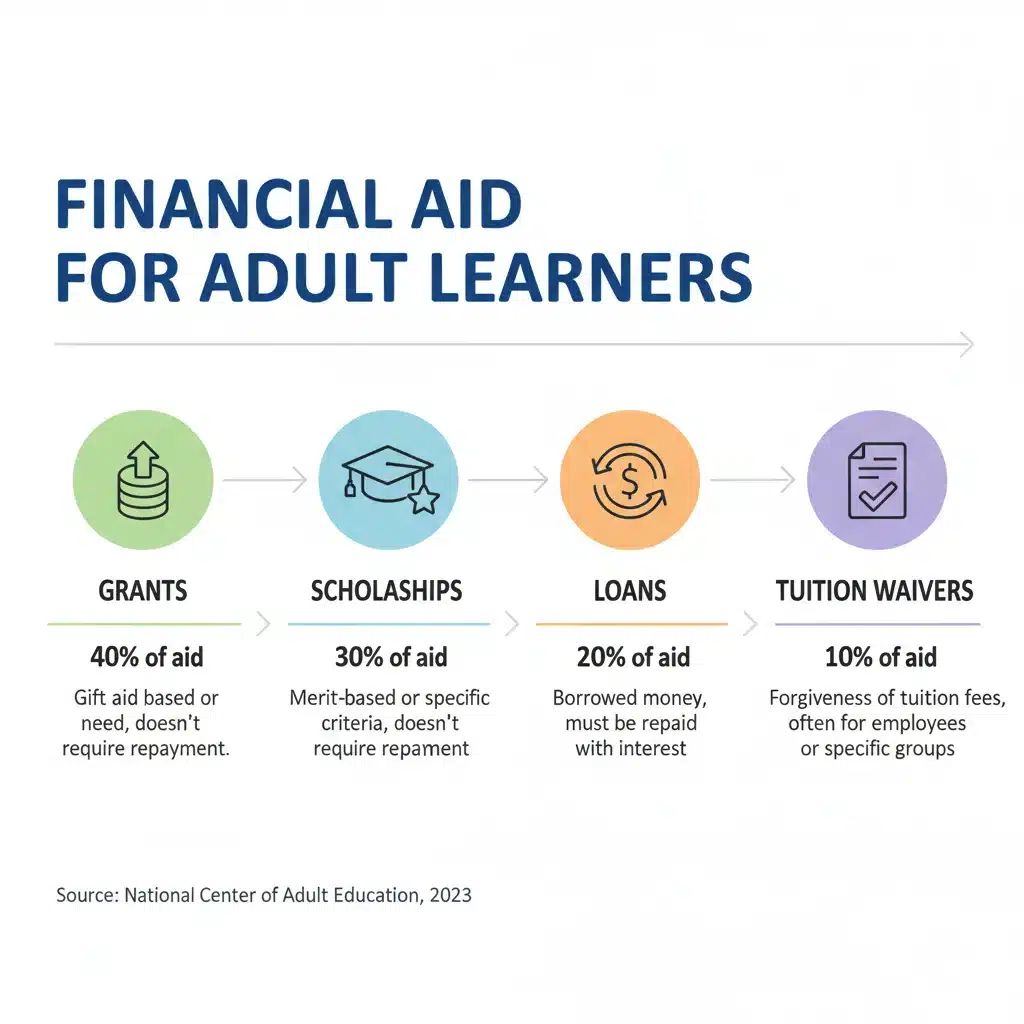
When exploring adult learner funding, it’s essential to understand the different categories of financial assistance available. These can vary significantly from state to state, but generally fall into several broad types:
1. State Grants and Scholarships
Grants are often need-based, meaning they are awarded based on your financial situation and do not need to be repaid. Scholarships, on the other hand, can be need-based or merit-based, recognizing academic achievement, specific talents, or demographic characteristics. Many states offer their own grant and scholarship programs specifically for residents pursuing higher education, including those returning as adult learners.
- Need-Based Grants: These are typically determined by the FAFSA and state-specific financial aid forms. They aim to assist students with demonstrated financial need. Eligibility criteria, such as income thresholds and enrollment status, are set by each state.
- Merit-Based Scholarships: While often associated with traditional college-aged students, many states offer scholarships for adult learners who demonstrate academic excellence, leadership, or have achieved specific milestones in their careers.
- Targeted Program Scholarships: These scholarships are often tied to specific fields of study that the state is trying to promote due to workforce shortages. For example, a state might offer scholarships for adult learners pursuing nursing, teaching, or engineering degrees.
- Demographic-Specific Grants/Scholarships: Some states provide funding for specific groups, such as single parents, veterans, individuals with disabilities, or those from underrepresented communities.
2. Tuition Waivers and Reimbursement Programs
Beyond direct financial aid, many states offer programs that reduce or eliminate tuition costs for eligible adult learners.
- Senior Citizen Waivers: Many states offer tuition waivers or reduced tuition rates for senior citizens (often 60 or 65 and older) attending state colleges or universities.
- Veteran Benefits: While federal VA benefits are primary, many states offer supplementary tuition waivers or grants for veterans and their dependents who are state residents.
- Employee Tuition Reimbursement: While not strictly state funding, many state government agencies and public institutions offer tuition reimbursement to their employees pursuing further education, which is a significant form of indirect state support.
- National Guard Tuition Assistance: State National Guard units often provide tuition assistance for their members attending state institutions.
3. Workforce Development and Training Programs
These programs are explicitly designed to help adult learners gain skills for in-demand jobs. They are often administered through state workforce agencies, community colleges, or vocational schools.
- Workforce Innovation and Opportunity Act (WIOA): Although a federal program, WIOA funds are disbursed to states, which then administer local programs. Adult learners can receive funding for training, career counseling, and job placement services in high-growth sectors. This is a vital source of adult learner funding.
- State-Specific Job Training Grants: Many states have their own grant programs to fund short-term training, certifications, and associate’s degrees in areas identified as critical to the state’s economy.
- Apprenticeship Programs: States often support registered apprenticeship programs, which combine on-the-job training with related technical instruction. While apprentices earn a wage, state support can help cover the costs of the educational component.
4. State-Sponsored Loan Programs
While grants and scholarships are preferable because they don’t require repayment, state-sponsored loan programs can offer more favorable terms than private loans, such as lower interest rates or more flexible repayment options. These are typically offered as a last resort after grants and scholarships have been exhausted.
Navigating Eligibility and Application for 2026 State Funding
Understanding the eligibility requirements and application processes is crucial for successfully securing adult learner funding. While specific details vary by state, some common themes emerge:
General Eligibility Criteria
- Residency: Almost all state-specific programs require applicants to be a legal resident of that state for a specified period (e.g., 12 months prior to application).
- Enrollment Status: Most programs require enrollment in an eligible degree or certificate program at an accredited institution within the state. Some may require a minimum number of credits (e.g., half-time or full-time).
- Academic Standing: Many programs require maintaining a satisfactory academic progress (SAP) once enrolled.
- Financial Need: For need-based aid, financial need is typically determined by the FAFSA and/or a state-specific financial aid application.
- Program of Study: As mentioned, some funding is tied to specific high-demand fields.
- Age/Adult Learner Status: While not always a strict requirement, many programs are designed with adult learners in mind, offering flexibility or specific support.
The Application Process: A Step-by-Step Guide
- Complete the FAFSA: This is often the first and most critical step for any financial aid, including state-specific aid. The FAFSA collects information about your financial situation to determine your Expected Family Contribution (EFC) and overall financial need. For 2026 funding, the FAFSA for the 2026-2027 academic year typically opens in October 2025. Be sure to use the correct year’s FAFSA.
- Research State Financial Aid Websites: Each state’s higher education agency or financial aid commission will have a dedicated website outlining available programs, eligibility, and application procedures. This is your primary resource for identifying specific adult learner funding opportunities.
- Check Institutional Financial Aid Offices: Even if a program is state-funded, the college or university you plan to attend often administers the funds. Their financial aid office will be knowledgeable about state programs relevant to their students.
- Gather Required Documentation: Be prepared to provide tax returns, W-2s, bank statements, and other financial documents. Some state programs may also require essays, letters of recommendation, or proof of residency.
- Meet Deadlines: State financial aid deadlines can be very strict and often earlier than federal deadlines. Missing a deadline can mean missing out on aid. Create a calendar with all relevant deadlines.
- Apply for Specific Programs: Beyond general state aid, actively apply for any targeted grants, scholarships, or workforce development programs for which you meet the criteria.
- Follow Up: Don’t hesitate to contact financial aid offices or state agencies if you have questions about your application status.
Spotlight on Promising State Initiatives for 2026
While a comprehensive list for all 50 states is beyond the scope of this article, here’s a look at the types of initiatives some states are likely to continue or enhance in 2026, offering significant adult learner funding:
States with Strong Workforce Development Focus:
- Georgia’s HOPE Grant and Scholarship Programs: Georgia has long been a leader in state-funded merit and need-based aid. The HOPE Grant specifically targets students pursuing certificates or diplomas at technical colleges, making it highly relevant for adult learners seeking rapid skill acquisition. The Zell Miller Grant offers full tuition for those meeting higher academic standards.
- Tennessee Reconnect: This pioneering program offers eligible adults 24 and older the opportunity to earn an associate degree or technical certificate tuition-free. Expect Tennessee to continue investing heavily in this successful initiative in 2026.
- Michigan’s Futures for Frontliners and Reconnect Programs: Michigan has made significant strides in providing tuition-free pathways for essential workers and all adults aged 25 and older. These programs are expected to remain strong in 2026, focusing on high-demand fields.
- Indiana’s Workforce Ready Grant: This grant covers tuition costs for high-value certificates in specific sectors for eligible Hoosiers, a program likely to see continued support.
States Supporting Broader Access:
- New York’s Excelsior Scholarship: While primarily for undergraduates, the Excelsior Scholarship provides tuition-free college at SUNY and CUNY schools for eligible New York residents. While strict income and credit requirements apply, it can be a significant benefit for adult learners who meet the criteria.
- California Community Colleges Promise Programs: Many California community colleges offer tuition-free first-year or even second-year programs for eligible students, including adults. These local initiatives are often bolstered by state funding.
- Washington State Opportunity Scholarship (WSOS): WSOS supports low- and middle-income students pursuing high-demand STEM and healthcare degrees. While competitive, it’s a valuable resource for adult learners in these fields.
It’s crucial to remember that these are examples, and each state has its own unique portfolio of programs. Always consult your state’s official higher education website for the most accurate and up-to-date information for 2026.
Maximizing Your Chances for Funding Success
Securing adult learner funding requires a proactive and organized approach. Here are additional tips to enhance your success:
1. Start Early and Be Organized
The adage "the early bird gets the worm" is particularly true for financial aid. Many grants and scholarships have limited funds, so applying early increases your chances. Create a checklist of all required documents, deadlines, and contact information for financial aid offices.
2. Understand Your "Adult Learner" Status
For financial aid purposes, you are generally considered an independent student if you are 24 years old or older, married, a veteran, have dependents, are an orphan or ward of the court, or are emancipated. This status can significantly impact your FAFSA results, as parental income is not considered, often leading to a higher financial aid eligibility.
3. Explore All Avenues – Don’t Just Rely on One
Combine federal, state, institutional, and private aid sources. Apply for as many scholarships and grants as you are eligible for. Even small scholarships can add up and significantly reduce your overall educational costs.
4. Craft Compelling Essays and Applications
Many scholarships require essays. Use this opportunity to articulate your goals, explain your unique circumstances as an adult learner, and demonstrate your commitment to your education. Proofread meticulously and tailor each application to the specific scholarship criteria.
5. Utilize Career Services and Academic Advisors
Your chosen institution’s career services department can often point you towards industry-specific scholarships or workforce development programs. Academic advisors can help you select a program of study that aligns with state-funded priorities.
6. Consider Online and Part-Time Options
Many state programs are becoming more flexible to accommodate adult learners, offering funding for part-time enrollment or online programs. This can make higher education more accessible while you manage other responsibilities.
7. Understand Repayment Obligations for Loans
If you do opt for state-sponsored loans, ensure you fully understand the repayment terms, interest rates, and any forgiveness programs that might be available upon graduation or employment in certain fields.

Resources for Finding State-Specific Funding
Locating the right adult learner funding can feel like a treasure hunt. Here are some key resources to guide your search:
- Your State’s Department of Higher Education Website: This is the authoritative source for state-specific grants, scholarships, and programs. Search for terms like "[Your State] financial aid," "[Your State] higher education commission," or "[Your State] student assistance."
- The FAFSA Website (StudentAid.gov): While federal, it’s the gateway to most state aid. It also provides links and information about state aid programs.
- College and University Financial Aid Offices: The financial aid office at your prospective institution is an invaluable resource. They can provide specific information about state programs that their students commonly receive.
- CareerOneStop.org: Sponsored by the U.S. Department of Labor, this site offers a wealth of information on career development, job search, and training programs, including links to state workforce agencies and funding opportunities.
- Scholarship Search Engines: Websites like Fastweb, Scholarship.com, and College Board’s Scholarship Search allow you to filter by various criteria, including age, state residency, and field of study.
- Professional Organizations and Associations: Many professional groups offer scholarships for individuals pursuing education in their specific field. Look for organizations related to your desired career path.
- Local Libraries and Community Centers: These often have resources, workshops, or counselors who can help you navigate financial aid applications.
The Long-Term Benefits of Investing in Adult Education
The pursuit of education as an adult learner, especially with the support of state-specific funding, offers profound long-term benefits not only for the individual but also for the state’s economy and society at large. For individuals, it can lead to:
- Increased Earning Potential: Higher education and specialized training often correlate with higher salaries and better job prospects.
- Career Advancement and Mobility: New skills can open doors to promotions, career changes, or entrepreneurship.
- Enhanced Job Security: Staying current with industry demands through education can make you a more valuable asset in the workforce.
- Personal Growth and Fulfillment: The intellectual stimulation and sense of accomplishment from achieving educational goals can be incredibly rewarding.
- Role Modeling for Future Generations: Adult learners often inspire their children, family members, and communities to pursue educational opportunities.
For states, investing in adult learner funding contributes to a more skilled, adaptable workforce, which in turn attracts businesses, fosters innovation, and strengthens the overall economic fabric. It reduces unemployment, increases tax revenues, and creates a more resilient and competitive state economy.
Conclusion
The journey of an adult learner is a testament to dedication and the belief in lifelong learning. Financial barriers, while significant, are not insurmountable, especially with the diverse array of state-specific educational funding available for 2026. By understanding the types of aid, diligently researching state programs, and meticulously completing applications, adult learners can unlock the financial support needed to achieve their academic and career aspirations.
Remember to start your research early, utilize all available resources, and don’t be afraid to seek guidance from financial aid professionals. Your commitment to education is an investment in your future, and with the right financial planning and state support, your educational goals are well within reach. The opportunities for adult learner funding in 2026 are robust and designed to empower you to succeed in a rapidly evolving world.
