The landscape of healthcare funding is constantly evolving, and for community health centers, securing reliable financial support is paramount to continuing their vital work. As we approach the mid-2020s, a critical deadline looms large on the horizon: March 2026. This date marks a significant opportunity for eligible organizations to apply for substantial federal grants 2026 designed to bolster the services and infrastructure of community health centers across the nation. Missing this window could mean forfeiting crucial resources that empower these centers to serve underserved populations, expand access to care, and address pressing public health challenges. This comprehensive guide is designed to equip you with the knowledge and strategies needed to navigate the application process successfully, ensuring your center is well-positioned to receive its share of these essential funds.
Community health centers are the backbone of primary care in countless communities, often serving as the sole source of affordable, comprehensive healthcare for millions of Americans. From preventative care and chronic disease management to behavioral health services and dental care, these centers offer a holistic approach to wellness. The federal grants 2026 represent a renewed commitment from the government to strengthen this critical sector, recognizing its indispensable role in achieving health equity and improving national health outcomes. Understanding the nuances of these funding opportunities, from eligibility requirements to crafting compelling proposals, is the first step toward unlocking their full potential for your organization.
Understanding the Significance of Federal Grants 2026 for Community Health
The allocation of federal grants 2026 for community health centers is not merely a bureaucratic exercise; it is a strategic investment in the health and well-being of the nation. These grants serve multiple critical purposes:
- Expanding Access to Care: A primary goal is to enable health centers to reach more patients, particularly those in rural, underserved, and low-income areas who might otherwise lack access to quality healthcare. This includes funding for new facilities, mobile health units, and increased staffing.
- Enhancing Service Offerings: Grants often support the expansion of existing services or the introduction of new ones, such as specialized behavioral health programs, substance abuse treatment, oral healthcare, and telehealth capabilities. This ensures that centers can address the evolving and diverse needs of their communities.
- Strengthening Infrastructure: Beyond direct patient care, these funds can be used to upgrade technology, improve electronic health records (EHR) systems, enhance data collection and analysis, and invest in facility renovations or expansions, thereby improving operational efficiency and patient experience.
- Workforce Development: Attracting and retaining skilled healthcare professionals is a persistent challenge, especially in underserved areas. Federal grants can support initiatives like loan repayment programs, training opportunities, and recruitment efforts to build a robust and sustainable healthcare workforce.
- Addressing Health Disparities: Community health centers are uniquely positioned to tackle health disparities by providing culturally competent care and addressing social determinants of health. Grant funding can support programs focused on specific populations, chronic disease prevention, and community outreach.
The March 2026 deadline underscores the urgency of this opportunity. Centers that are proactive in their preparation and submission stand the best chance of securing these transformative funds. The competitive nature of these grants necessitates a thorough understanding of the application process, a clear articulation of need, and a compelling vision for how the funding will be utilized to achieve measurable impact.
Key Eligibility Criteria for Federal Grants 2026
Before embarking on the detailed application process, it is crucial to confirm your organization’s eligibility for the federal grants 2026. While specific requirements can vary slightly depending on the particular grant program, most federal funding for community health centers adheres to a set of core criteria. These typically include:
- Non-profit Status: The vast majority of federal grants for health centers are awarded to private, non-profit organizations or public entities.
- Service Area Designation: The health center must serve a medically underserved area (MUA) or a medically underserved population (MUP), as designated by the Health Resources and Services Administration (HRSA).
- Comprehensive Primary Care: Centers must provide comprehensive primary healthcare services, including medical, dental, behavioral health, and often pharmacy services, on a sliding fee scale based on a patient’s ability to pay.
- Governing Board Structure: A majority (at least 51%) of the governing board members must be patients of the health center and represent the population served. This ensures community voice and accountability.
- Operational Capacity: Centers must demonstrate the operational and financial capacity to manage federal funds responsibly and effectively, including robust financial management systems and a track record of compliance.
- Compliance with Federal Regulations: Applicants must agree to comply with all applicable federal laws, regulations, and program requirements, including those related to reporting, audits, and patient privacy (HIPAA).
It is highly recommended that potential applicants consult the official Notice of Funding Opportunity (NOFO) or Funding Opportunity Announcement (FOA) for the specific grant program they are interested in. These documents provide the most up-to-date and detailed eligibility criteria, as well as instructions for applying. Early review of these documents can save significant time and effort by ensuring your center meets all foundational requirements.
Navigating the Application Process: A Step-by-Step Guide
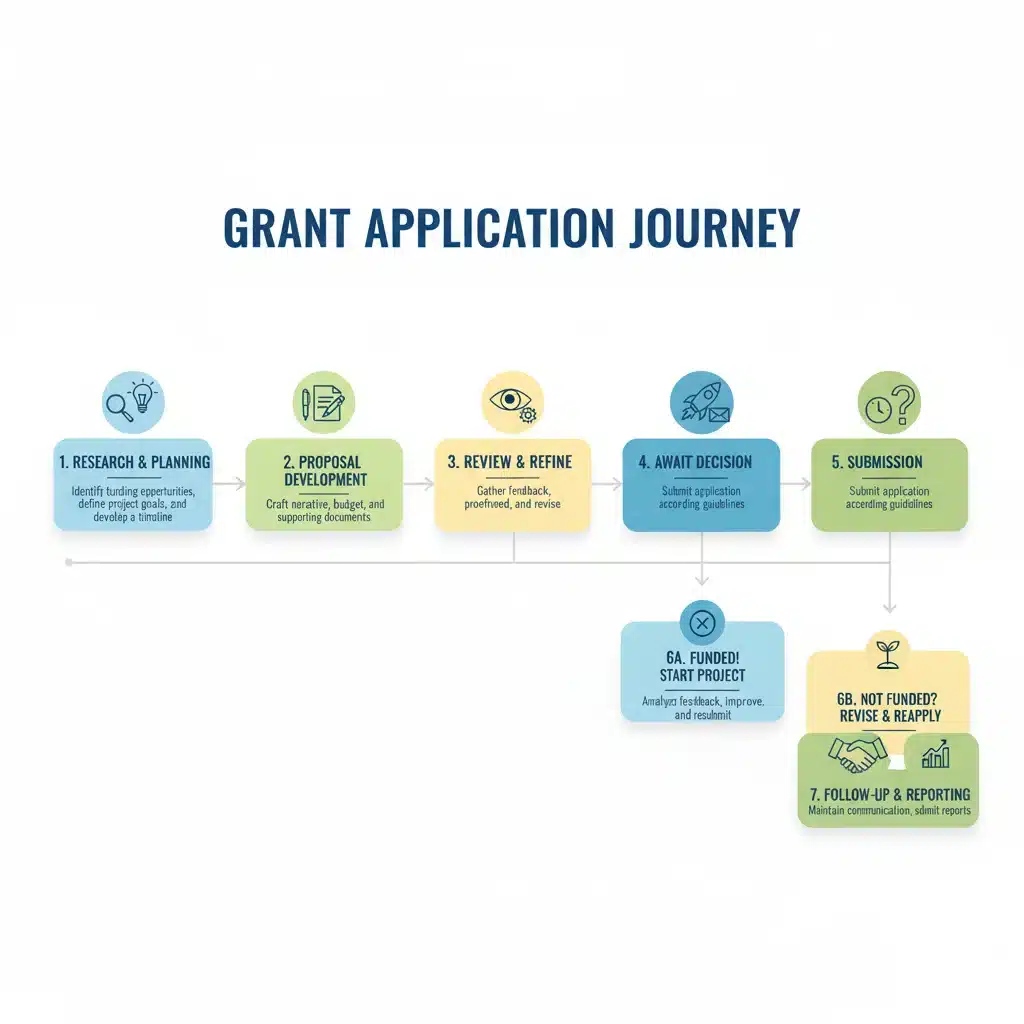
Applying for federal grants 2026 can be a complex undertaking, but a systematic approach can significantly increase your chances of success. Here’s a step-by-step guide to help you navigate the process:
Step 1: Thorough Research and Planning (Commence Immediately)
The March 2026 deadline might seem distant, but effective grant writing requires substantial lead time. Start by identifying specific grant programs that align with your center’s mission, current needs, and future goals. Utilize resources like Grants.gov, HRSA’s website, and professional grant-seeking databases. Pay close attention to:
- Program Objectives: Understand what the funding agency aims to achieve with the grant. Your proposal must clearly demonstrate how your project contributes to these objectives.
- Funding Amounts: Be realistic about the amount of funding available and tailor your project scope accordingly.
- Required Documents: Compile a checklist of all necessary attachments, certifications, and forms.
- Review Criteria: Familiarize yourself with how applications will be scored. This is your blueprint for crafting a winning proposal.
Form a dedicated grant team within your organization, including clinical, administrative, and financial staff. Assign roles and responsibilities early on.
Step 2: Develop a Compelling Project Proposal
This is the core of your application. Your proposal must be clear, concise, well-organized, and persuasive. Key components typically include:
- Executive Summary: A brief, powerful overview of your project, its goals, and expected impact. This should grab the reviewer’s attention.
- Statement of Need: Articulate the problem your project addresses. Use data, statistics, and community-specific information to demonstrate the urgency and significance of the need. For community health centers, this often involves highlighting health disparities, access barriers, and the specific challenges faced by your patient population.
- Project Description: Detail your proposed activities, interventions, and services. Explain what you will do, how you will do it, and who will be involved. Be specific and avoid jargon.
- Goals and Objectives: State clear, measurable, achievable, relevant, and time-bound (SMART) goals and objectives. How will you know if your project is successful?
- Evaluation Plan: Describe how you will monitor progress, collect data, and evaluate the effectiveness of your project. This demonstrates accountability and a commitment to results.
- Organizational Capacity: Highlight your center’s experience, expertise, and resources relevant to the proposed project. Showcase your track record of success and your team’s qualifications.
- Sustainability Plan: Explain how your project will continue to operate and deliver benefits after the grant funding ends. This is a critical component for many federal grants.

Step 3: Craft a Detailed Budget and Justification
The budget is where you translate your project plan into financial terms. It must be realistic, reasonable, and directly align with your proposed activities. Include:
- Personnel Costs: Salaries, wages, and fringe benefits for staff involved in the project.
- Operating Expenses: Supplies, equipment, travel, rent, utilities, and other direct costs.
- Indirect Costs: Administrative and overhead expenses.
Each budget item must be thoroughly justified. Explain why each expense is necessary for the successful implementation of your project. Ensure consistency between your narrative and your budget – if you describe a new program requiring a specific piece of equipment, that equipment must appear in your budget.
Step 4: Gather Supporting Documentation
Federal grant applications often require a significant amount of supporting documentation. This can include:
- Letters of support from community partners.
- Resumes/CVs of key personnel.
- Organizational charts.
- Financial statements and audit reports.
- Memoranda of Understanding (MOUs) with collaborating organizations.
- Proof of non-profit status.
Start collecting these documents early, as some may require time to obtain or prepare.
Step 5: Review, Revise, and Refine
Do not submit your first draft. Allow ample time for multiple rounds of review by different individuals, including those unfamiliar with the project. They can offer fresh perspectives and catch errors or ambiguities. Check for:
- Clarity and Cohesion: Does the entire application flow logically?
- Accuracy: Are all facts, figures, and calculations correct?
- Completeness: Have all sections been addressed, and all required documents included?
- Compliance: Does the application adhere strictly to all formatting and submission guidelines?
- Grammar and Spelling: Professionalism matters.
Consider engaging a professional editor or grant writer for a final review, especially for large, complex applications.
Step 6: Timely Submission
The March 2026 deadline is firm. Technical issues can arise, so plan to submit your application well in advance of the official deadline. Familiarize yourself with the Grants.gov submission portal and ensure your organization’s registration is current. A late submission, regardless of the reason, will almost certainly result in rejection.
Maximizing Your Chances: Best Practices for Federal Grant Applications
Beyond the fundamental steps, several best practices can significantly enhance your application for federal grants 2026:
1. Align with Funder Priorities
Federal agencies often have specific strategic priorities. Research these extensively and demonstrate how your project directly addresses them. For example, if HRSA is emphasizing rural health or maternal health, highlight how your center’s proposal will impact these areas.
2. Data-Driven Storytelling
While data is essential to prove need, don’t forget the human element. Weave compelling narratives and anecdotes (while maintaining patient privacy) that illustrate the real-world impact of your center’s work and the potential of your proposed project. Data provides credibility; stories create connection.
3. Strong Community Partnerships
Federal funders often look favorably upon applications that demonstrate strong community collaboration. Highlight existing partnerships with local government, schools, non-profits, and other healthcare providers. Letters of support from these partners can significantly strengthen your application.
4. Demonstrate Innovation and Impact
Consider how your project offers an innovative solution to a persistent problem or how it can serve as a model for other organizations. Clearly articulate the anticipated outcomes and long-term impact of your project, both for your patients and the broader community.
5. Professional Presentation
A well-formatted, easy-to-read application reflects positively on your organization. Use clear headings, bullet points, and appropriate white space. Adhere strictly to page limits and font requirements. A professional presentation suggests a professional organization.
6. Seek Feedback and Learn from Rejection
If your application is not successful, seek feedback from the funding agency. Understanding why your proposal was not selected can provide invaluable insights for future applications. Many successful grant recipients have faced initial rejections.
Anticipated Focus Areas for Federal Grants 2026
While specific grant announcements will provide definitive focus areas, based on current trends and national health priorities, community health centers can anticipate federal grants 2026 to emphasize:
- Behavioral Health Integration: Continued focus on integrating mental health and substance use disorder services into primary care settings.
- Addressing Health Disparities: Initiatives targeting racial, ethnic, geographic, and socioeconomic health inequities.
- Telehealth Expansion: Funding to enhance and expand virtual care capabilities, particularly in rural and underserved areas.
- Maternal and Child Health: Programs aimed at improving maternal health outcomes, reducing infant mortality, and supporting child development.
- Chronic Disease Management: Projects focused on preventing and managing prevalent chronic conditions like diabetes, heart disease, and hypertension.
- Social Determinants of Health: Investments in programs that address non-medical factors influencing health, such as food insecurity, housing stability, and access to transportation.
- Workforce Development: Support for recruitment, training, and retention of healthcare professionals, especially in high-need specialties.
- Emergency Preparedness and Response: Enhancing health centers’ capacity to respond to public health emergencies and natural disasters.
Tailoring your project to align with these broader priorities will significantly strengthen your application and demonstrate your center’s relevance to national health goals. Stay informed by regularly checking HRSA and Grants.gov for updates on specific funding opportunities as they are released.
Resources and Support for Applicants
You don’t have to navigate the federal grants 2026 application process alone. Numerous resources are available to assist community health centers:
- Grants.gov: The central federal portal for finding and applying for federal grants. Ensure your organization is registered and your System for Award Management (SAM) registration is active.
- Health Resources and Services Administration (HRSA): The primary federal agency overseeing health centers. Their website is an invaluable source of information on grant programs, technical assistance, and policy guidance.
- National Association of Community Health Centers (NACHC): NACHC provides advocacy, training, and technical assistance to health centers, including resources related to grant funding.
- State Primary Care Associations (PCAs): Each state has a PCA that offers direct support, training, and resources tailored to the needs of health centers within their state. They often have specific knowledge about state-level funding and can provide guidance on federal applications.
- Grant Writing Consultants: For centers with limited internal capacity, engaging an experienced grant writing consultant can be a worthwhile investment, though it requires careful vetting.
- Online Webinars and Workshops: Many organizations offer free or low-cost webinars and workshops on grant writing, federal regulations, and specific funding opportunities.
Proactive engagement with these resources can provide critical insights, answer specific questions, and help refine your application strategy. Don’t hesitate to reach out for help and leverage the expertise available.
The Long-Term Impact of Securing Federal Grants
Securing federal grants 2026 extends far beyond the immediate financial benefit. It provides a foundation for long-term sustainability and growth for community health centers. These funds can:
- Enhance Organizational Stability: Diversifying funding sources reduces reliance on single revenue streams, making centers more resilient to economic fluctuations.
- Improve Patient Outcomes: Expanded services, upgraded facilities, and enhanced workforce capacity directly translate to better health outcomes for patients.
- Strengthen Community Trust: Federal funding validates a center’s role as a trusted community asset, fostering greater engagement and support.
- Catalyze Further Investment: A successful federal grant often serves as a catalyst, attracting additional state, local, and private funding opportunities.
- Foster Innovation: Grants can provide the necessary capital to pilot innovative programs and services that address emerging health needs.
The ripple effect of federal investment in community health centers is profound, contributing to healthier individuals, stronger families, and more vibrant communities. By diligently preparing for the March 2026 deadline, your center can play a pivotal role in this transformative process.
Conclusion: Act Now for Federal Grants 2026
The March 2026 deadline for federal grants 2026 for community health centers is a significant opportunity that demands immediate attention and strategic planning. These grants are not just about funding; they are about empowering health centers to expand their reach, enhance their services, and deepen their impact on the lives of millions. By understanding the eligibility criteria, meticulously preparing your application, and leveraging available resources, your organization can position itself for success.
Start your research today, assemble your grant team, and begin crafting a compelling proposal that clearly articulates your center’s mission, demonstrates a profound understanding of community needs, and outlines a clear, measurable plan for utilizing federal funds to achieve transformative results. The future of community health in America depends on the continued strength and vitality of centers like yours. Don’t miss this critical opportunity to secure the resources needed to continue your invaluable work.
