
In an increasingly interconnected world, where digital threats loom larger than ever, governments are stepping up their efforts to safeguard critical infrastructure and sensitive data. The United States is no exception, with new federal cybersecurity mandates poised to reshape the digital landscape for a significant portion of its business community. By March 2026, an estimated 15% of U.S. businesses will be directly impacted by these stringent new regulations, demanding a proactive and comprehensive approach to cyber defense. This isn’t merely a compliance exercise; it’s a fundamental shift towards a more resilient and secure national digital ecosystem.
For many businesses, particularly small and medium-sized enterprises (SMEs) that may have historically operated with less formalized cybersecurity frameworks, these mandates represent a substantial undertaking. The implications are far-reaching, touching upon everything from IT infrastructure and data handling protocols to employee training and vendor management. Ignoring these changes is not an option, as non-compliance could lead to severe penalties, reputational damage, and an increased vulnerability to cyberattacks. This article aims to demystify these upcoming federal cybersecurity mandates, providing a detailed roadmap for businesses to understand, prepare for, and ultimately thrive under the new regulatory environment.
Understanding the Scope: Who is Affected by the Federal Cybersecurity Mandates?
The first critical step for any business is to determine if they fall within the 15% of U.S. businesses targeted by these new federal cybersecurity mandates. While specific details are still being finalized and disseminated, early indications suggest that the regulations will primarily focus on sectors deemed critical to national security, economic stability, or public health and safety. This often includes, but is not limited to, companies involved in:
- Critical Infrastructure: Energy, water, telecommunications, transportation, and financial services.
- Defense Industrial Base (DIB): Contractors and subcontractors working with the Department of Defense.
- Healthcare: Organizations handling protected health information (PHI).
- Federal Contractors and Supply Chain: Businesses that directly or indirectly supply goods and services to federal agencies.
- Companies handling Controlled Unclassified Information (CUI): Any organization that processes, stores, or transmits sensitive but unclassified government information.
It’s important to note that the impact often extends beyond direct contractors. Supply chain mandates mean that even businesses not directly engaged with federal contracts but supplying goods or services to a regulated entity may find themselves needing to comply with similar, if not identical, standards. This ‘trickle-down’ effect is designed to strengthen the overall security posture of critical supply chains, recognizing that a weak link anywhere can compromise the entire chain.
Businesses should actively monitor official government announcements, industry-specific guidance, and engage with relevant trade associations to ascertain their exact obligations. Proactive assessment of your business’s involvement in these critical sectors or supply chains is paramount to avoiding last-minute scrambling.
Key Pillars of the New Federal Cybersecurity Mandates
While the precise framework of the federal cybersecurity mandates will vary depending on the specific industry and nature of operations, several common themes and requirements are expected to form the bedrock of these regulations. These pillars are generally aligned with established cybersecurity best practices and frameworks, such as NIST (National Institute of Standards and Technology) Cybersecurity Framework and ISO 27001. Businesses should anticipate requirements in the following areas:
1. Robust Risk Management Frameworks
At the core of the new mandates will be a requirement for businesses to implement and maintain a comprehensive risk management framework. This involves:
- Identifying Assets: Cataloging all critical information systems, data, and operational technologies.
- Threat Assessment: Continuously identifying potential cyber threats and vulnerabilities.
- Risk Analysis: Evaluating the likelihood and impact of identified threats.
- Risk Mitigation: Developing and implementing strategies to reduce identified risks to an acceptable level.
- Continuous Monitoring: Regularly reviewing and updating the risk management framework to adapt to evolving threats and business changes.
This isn’t a one-time exercise but an ongoing process that requires dedicated resources and executive-level commitment.
2. Enhanced Incident Response and Reporting
The new mandates will undoubtedly place a significant emphasis on an organization’s ability to detect, respond to, and recover from cybersecurity incidents. Key components will likely include:
- Incident Response Plan: A well-documented and regularly tested plan outlining roles, responsibilities, and procedures for handling cyberattacks.
- Breach Notification: Strict timelines and protocols for reporting cybersecurity incidents to relevant federal agencies and, where applicable, affected individuals.
- Forensic Capabilities: The ability to conduct thorough investigations into security breaches to understand their scope, origin, and impact.
- Recovery and Resilience: Strategies and systems to ensure business continuity and rapid recovery of operations after an attack.
The speed and effectiveness of incident response can significantly mitigate the damage caused by a cyberattack, making this a critical area of focus for the new federal cybersecurity mandates.
3. Access Control and Data Protection
Protecting sensitive data from unauthorized access, alteration, or destruction is a cornerstone of cybersecurity. Businesses should expect requirements related to:
- Least Privilege Access: Ensuring users only have access to the resources absolutely necessary for their job functions.
- Multi-Factor Authentication (MFA): Implementing MFA for all sensitive systems and accounts.
- Data Encryption: Encrypting data both in transit and at rest, especially for sensitive information.
- Data Loss Prevention (DLP): Technologies and policies to prevent sensitive data from leaving the organization’s control.
- Regular Auditing: Conducting frequent audits of access logs and data usage to detect anomalous behavior.
4. Vendor and Supply Chain Risk Management
As mentioned earlier, the supply chain is a common vector for cyberattacks. The federal cybersecurity mandates will likely extend requirements to third-party vendors and suppliers. This means businesses will need to:
- Assess Vendor Security: Evaluate the cybersecurity posture of all third-party vendors and partners.
- Contractual Obligations: Incorporate cybersecurity requirements into contracts with vendors.
- Continuous Monitoring: Monitor vendor compliance and security practices throughout the contract lifecycle.
5. Security Awareness Training and Workforce Development
Human error remains a leading cause of security breaches. The mandates will likely emphasize the importance of a well-trained and cyber-aware workforce. This includes:
- Mandatory Training: Regular, comprehensive cybersecurity awareness training for all employees.
- Phishing Simulations: Conducting simulated phishing attacks to test employee vigilance.
- Specialized Training: Providing advanced cybersecurity training for IT and security personnel.
Investing in your human firewall is just as crucial as investing in technological defenses.
Preparing for Compliance: A Strategic Roadmap
Achieving compliance with the new federal cybersecurity mandates by March 2026 requires a structured and strategic approach. Procrastination is a luxury no business can afford in this scenario. Here’s a roadmap to guide your preparation:
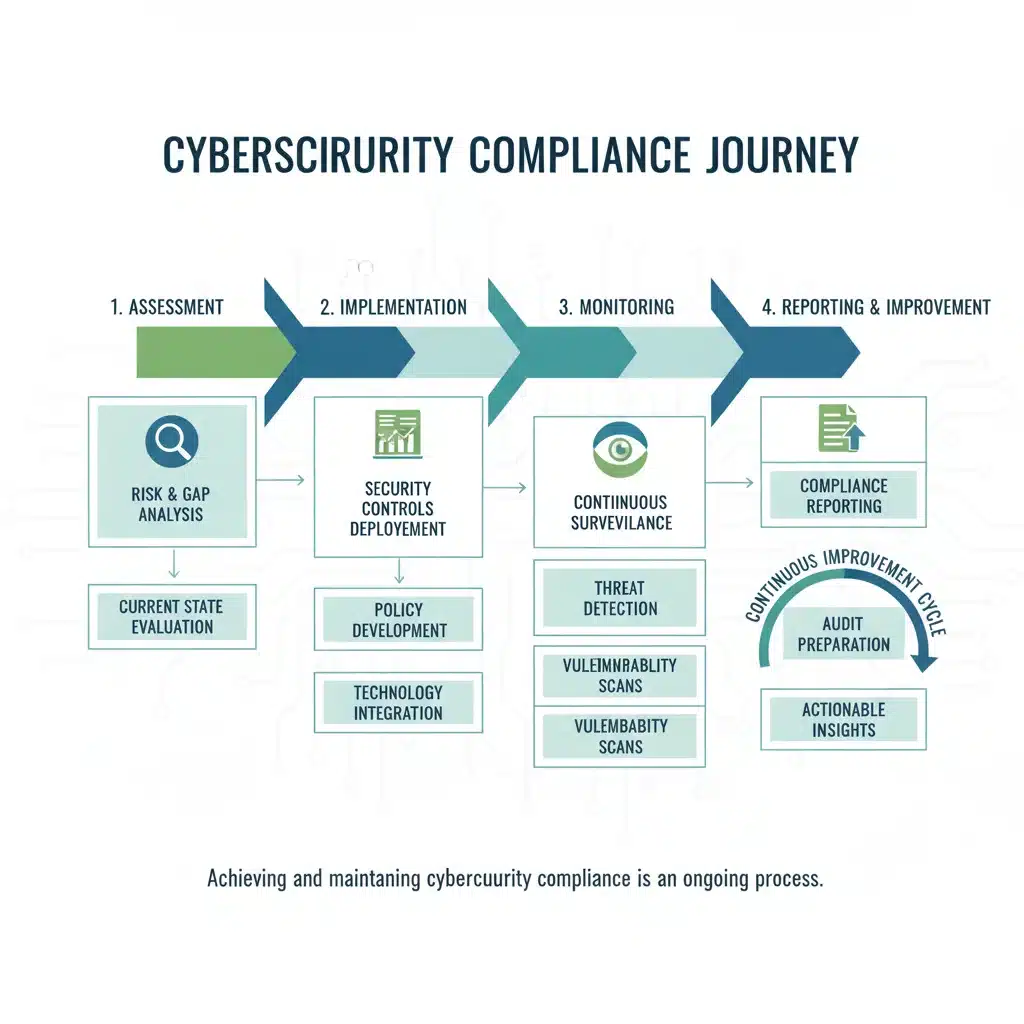
Phase 1: Assessment and Gap Analysis (Now – Q4 2024)
The initial phase involves understanding your current cybersecurity posture relative to the anticipated mandates.
- Identify Applicable Mandates: Confirm which specific federal cybersecurity mandates apply to your business based on industry, contracts, and data handled. Consult legal counsel and cybersecurity experts.
- Conduct a Comprehensive Risk Assessment: Perform a thorough evaluation of your existing IT infrastructure, data assets, and operational technology. Identify vulnerabilities, potential threats, and existing controls.
- Perform a Gap Analysis: Compare your current cybersecurity controls and practices against the requirements of the new mandates. Document all discrepancies and areas needing improvement. This will form the basis of your compliance roadmap.
- Inventory Data and Systems: Gain a clear understanding of where sensitive data resides, how it’s processed, and who has access to it. Map your network and identify all connected devices.
- Engage Leadership: Secure executive buy-in and allocate necessary resources (budget, personnel) for the compliance initiative. Cybersecurity compliance is a business imperative, not just an IT task.
Phase 2: Planning and Strategy Development (Q4 2024 – Q2 2025)
Once you understand your gaps, the next step is to develop a detailed plan to address them.
- Develop a Compliance Roadmap: Create a phased plan outlining specific actions, timelines, responsible parties, and measurable outcomes for achieving compliance. Prioritize critical gaps first.
- Budget Allocation: Allocate sufficient financial resources for technology upgrades, personnel training, third-party assessments, and ongoing maintenance.
- Policy and Procedure Updates: Review and update existing cybersecurity policies, procedures, and guidelines to align with the new mandates. Develop new ones where necessary (e.g., incident response plans, data handling policies).
- Technology Evaluation and Procurement: Identify and acquire necessary cybersecurity tools and technologies, such as advanced threat detection systems, encryption solutions, identity and access management (IAM) platforms, and security information and event management (SIEM) systems.
- Vendor Due Diligence Framework: Establish a robust process for assessing and managing the cybersecurity risks posed by third-party vendors and suppliers. Update vendor contracts to include compliance clauses.
Phase 3: Implementation and Remediation (Q2 2025 – Q4 2025)
This is the execution phase where the planned changes are put into action.
- Implement Technical Controls: Deploy and configure new security technologies. Strengthen existing controls such as firewalls, intrusion detection/prevention systems, antivirus, and endpoint protection.
- Update Access Controls: Implement multi-factor authentication (MFA) across all critical systems, enforce least privilege principles, and regularly review user access permissions.
- Data Protection Measures: Encrypt sensitive data at rest and in transit. Implement data loss prevention (DLP) solutions.
- Develop and Test Incident Response Plan: Create a detailed incident response plan and conduct tabletop exercises and simulations to test its effectiveness. Ensure clear communication channels for reporting incidents internally and externally.
- Employee Training and Awareness: Roll out comprehensive cybersecurity awareness training programs for all employees. Conduct regular phishing simulations and provide specialized training for IT and security staff.
- Supply Chain Integration: Work with critical vendors to ensure their compliance and integrate their security practices into your overall risk management framework.
Phase 4: Validation, Monitoring, and Continuous Improvement (Q4 2025 – Ongoing)
Compliance is not a one-time event but an ongoing commitment.
- Internal Audits and Assessments: Conduct regular internal audits to verify compliance with the new federal cybersecurity mandates and your own policies.
- Third-Party Audits/Certifications: Consider engaging independent third-party auditors to assess your compliance posture, especially if specific certifications are required by the mandates.
- Continuous Monitoring: Implement security information and event management (SIEM) systems and other monitoring tools to continuously track security events, detect anomalies, and respond to threats in real-time.
- Review and Update: Regularly review and update your cybersecurity policies, procedures, and controls to adapt to evolving threat landscapes, technological advancements, and changes in regulatory requirements.
- Maintain Documentation: Keep meticulous records of all compliance efforts, including policies, procedures, risk assessments, training records, and incident reports. This documentation will be crucial during audits.
The Business Implications of Non-Compliance
Failing to comply with the new federal cybersecurity mandates can have severe repercussions for businesses, extending far beyond simple fines. Understanding these implications underscores the urgency of proactive preparation:
Financial Penalties
Direct financial penalties can be substantial, often calculated per violation or per day of non-compliance. These fines can quickly accumulate, crippling a business’s financial stability. For federal contractors, non-compliance could also lead to contract termination and disqualification from future government contracts, impacting a significant revenue stream.
Reputational Damage
In today’s interconnected world, news of a data breach or regulatory non-compliance spreads rapidly. Such incidents can severely damage a company’s reputation, eroding customer trust, deterring new business, and negatively impacting brand value. Rebuilding a damaged reputation is a long and arduous process, often costing more than initial compliance efforts.
Legal and Litigation Risks
Non-compliance can expose businesses to legal challenges from affected individuals, clients, or partners whose data was compromised. Class-action lawsuits, regulatory investigations, and demands for compensation can lead to protracted legal battles and significant legal fees.
Operational Disruption
A cybersecurity incident resulting from inadequate controls can lead to significant operational disruption. Downtime, data loss, system recovery efforts, and the diversion of resources to address the breach can severely impact productivity, supply chains, and service delivery, leading to lost revenue and customer dissatisfaction.
Loss of Competitive Advantage
Businesses that fail to meet the new federal cybersecurity mandates may find themselves at a competitive disadvantage. Clients, especially those in regulated industries, will increasingly seek out partners who demonstrate robust cybersecurity practices and compliance. Non-compliant businesses may be excluded from critical partnerships and market opportunities.
Leveraging the Mandates for Strategic Advantage
While the new federal cybersecurity mandates may seem like an onerous burden, forward-thinking businesses can leverage them as an opportunity for strategic advantage. By viewing compliance not just as a cost center but as an investment, organizations can achieve several benefits:
Enhanced Security Posture
The primary benefit is a significantly improved cybersecurity posture. By implementing the required controls, businesses become more resilient against the ever-evolving landscape of cyber threats, reducing the likelihood and impact of successful attacks.
Increased Trust and Reputation
Demonstrating compliance builds trust with customers, partners, and stakeholders. It signals a commitment to data protection and operational integrity, enhancing your brand’s reputation and potentially attracting new business. This is particularly true for businesses operating within critical sectors where security is paramount.
Operational Efficiencies
A well-structured cybersecurity framework often leads to improved IT governance, streamlined processes, and better data management. This can result in operational efficiencies, reduced IT costs in the long run, and a clearer understanding of your digital assets.
Competitive Differentiation
For businesses that move quickly and effectively to achieve compliance, it can become a key differentiator. Being able to confidently state that you meet rigorous federal standards can set you apart from competitors who are lagging, opening doors to new contracts and partnerships, especially with federal agencies or their prime contractors.
Better Risk Management
The mandates force a more disciplined approach to risk management. This holistic view of risks, both cyber and operational, leads to better decision-making and a more stable business environment.

The Role of Managed Security Service Providers (MSSPs)
For many businesses, particularly SMEs, the complexity and resource demands of complying with new federal cybersecurity mandates can be overwhelming. This is where Managed Security Service Providers (MSSPs) can play a crucial role. MSSPs offer specialized expertise, advanced technologies, and 24/7 monitoring capabilities that many organizations lack internally.
Engaging an MSSP can help businesses:
- Access Expert Knowledge: MSSPs stay abreast of the latest threats and regulatory changes, providing invaluable guidance on compliance requirements.
- Fill Resource Gaps: They can act as an extension of your internal IT team, providing dedicated cybersecurity professionals without the overhead of hiring full-time staff.
- Implement Advanced Technologies: MSSPs often have access to enterprise-grade security tools (SIEM, EDR, threat intelligence platforms) that might be cost-prohibitive for individual businesses.
- Ensure Continuous Monitoring: 24/7 security operations center (SOC) services provide constant vigilance against threats, a requirement that is difficult for most businesses to meet internally.
- Streamline Compliance: MSSPs can help develop and implement compliance frameworks, conduct audits, and prepare necessary documentation.
When selecting an MSSP, businesses should look for providers with a proven track record in their industry, demonstrable expertise in federal compliance frameworks (e.g., NIST, CMMC), and robust service level agreements (SLAs).
Key Technologies to Consider for Compliance
Meeting the new federal cybersecurity mandates will likely necessitate investments in specific cybersecurity technologies. While the exact stack will depend on individual business needs, here are some key areas to consider:
- Security Information and Event Management (SIEM): Centralizes and analyzes security logs from various sources, providing real-time threat detection and incident response capabilities.
- Endpoint Detection and Response (EDR) / Extended Detection and Response (XDR): Provides advanced threat detection, investigation, and response capabilities across endpoints, networks, and cloud environments.
- Identity and Access Management (IAM): Manages user identities and access privileges, enforcing policies like multi-factor authentication (MFA) and single sign-on (SSO).
- Data Loss Prevention (DLP): Monitors and controls data movement to prevent sensitive information from leaving the organization’s network or devices.
- Vulnerability Management Systems: Continuously scan for and identify vulnerabilities in systems and applications, prioritizing remediation efforts.
- Cloud Security Posture Management (CSPM): For businesses utilizing cloud services, CSPM tools ensure cloud configurations comply with security best practices and regulatory requirements.
- Security Awareness Training Platforms: Provide interactive training modules and phishing simulation tools to educate employees and test their vigilance.
- Encryption Solutions: Tools for encrypting data at rest (e.g., full disk encryption, database encryption) and in transit (e.g., VPNs, SSL/TLS).
The integration of these technologies into a cohesive security architecture, managed by skilled professionals, will be crucial for effective compliance and robust cyber defense.
The Future of Cybersecurity: Beyond Compliance
The upcoming federal cybersecurity mandates are not an endpoint but rather a significant milestone in the ongoing evolution of cybersecurity. As digital threats become more sophisticated, so too must our defenses. Businesses that embrace these mandates as an opportunity to fundamentally strengthen their security posture will be better positioned for future challenges.
Looking beyond 2026, we can anticipate further regulatory developments, an increased focus on emerging technologies like AI and quantum computing in both attack and defense, and a continued emphasis on supply chain security. The shift is towards a proactive, adaptive, and intelligence-driven approach to cybersecurity, where continuous improvement and resilience are paramount.
For the 15% of U.S. businesses impacted, the journey to compliance will require dedication, investment, and a cultural shift towards prioritizing cybersecurity at every level of the organization. However, the rewards – enhanced security, increased trust, and sustained business continuity – far outweigh the challenges. By starting early and maintaining a vigilant approach, businesses can not only meet these new federal cybersecurity mandates but also transform their security from a necessary cost into a strategic asset.
Conclusion: Navigating the New Cybersecurity Landscape
The impending federal cybersecurity mandates for 15% of U.S. businesses by March 2026 mark a pivotal moment in the nation’s effort to bolster its digital defenses. These regulations will demand a significant re-evaluation and strengthening of cybersecurity practices across critical sectors and their supply chains. From establishing robust risk management frameworks and enhancing incident response capabilities to implementing stringent access controls and fostering a cyber-aware workforce, the requirements are comprehensive.
Businesses must recognize that this is more than just a regulatory hurdle; it’s an opportunity to build resilience, protect valuable assets, and secure their future in an increasingly hostile digital environment. Proactive assessment, strategic planning, diligent implementation, and continuous monitoring are the cornerstones of successful compliance. While the task may seem daunting, leveraging internal expertise, external consultants, and Managed Security Service Providers can significantly ease the burden.
Ultimately, those businesses that embrace these federal cybersecurity mandates not as an obligation but as an investment in their security and trustworthiness will emerge stronger, more competitive, and better prepared for the evolving challenges of the digital age. The clock is ticking, and the time to act is now to ensure your organization is not just compliant, but truly secure, by March 2026.
