
Maximizing Your GI Bill Benefits in 2026: A Practical Guide for Veterans’ Education
Transitioning from military service to civilian life often involves pursuing higher education or vocational training. For many veterans, the GI Bill is an invaluable resource, providing the financial support needed to achieve academic and career goals. As we look towards 2026, understanding the nuances of your GI Bill benefits 2026 is crucial for maximizing this powerful educational tool. This comprehensive guide will walk you through everything you need to know, from eligibility and application to strategic planning and common pitfalls to avoid.
Understanding Your GI Bill Benefits: What’s Available in 2026?
The GI Bill, particularly the Post-9/11 GI Bill, offers a robust package of education benefits for eligible service members and veterans. These benefits can cover tuition and fees, provide a monthly housing allowance (MHA), and offer a stipend for books and supplies. For those planning their education in 2026, it’s essential to be aware of the current provisions and any potential updates or changes that might affect your entitlements. The core structure of the Post-9/11 GI Bill is expected to remain largely consistent, but staying informed about specific rates and policies is key.
Post-9/11 GI Bill (Chapter 33) Explained
The Post-9/11 GI Bill is the most widely used and comprehensive education benefit for veterans. It provides financial support for up to 36 months of education, generally equivalent to four academic years. The amount of benefit you receive depends on your length of active-duty service after September 10, 2001. To fully utilize your GI Bill benefits 2026, understanding the breakdown of these benefits is critical:
- Tuition and Fees: The VA pays up to the in-state maximum tuition and fees directly to the school for public institutions. For private or foreign schools, a national maximum cap applies. This is a significant component of your GI Bill benefits 2026, directly reducing the financial burden of higher education.
- Monthly Housing Allowance (MHA): This stipend is generally equivalent to the Basic Allowance for Housing (BAH) for an E-5 with dependents, based on the ZIP code of your school’s main campus. It’s paid directly to you each month. The MHA is a crucial aspect for covering living expenses while studying, and its value can vary significantly by location.
- Books and Supplies Stipend: An annual stipend of up to $1,000 is paid proportionally based on your enrollment. This helps cover the cost of textbooks, course materials, and other necessary supplies.
It’s important to note that the MHA and books/supplies stipends are typically prorated based on your enrollment status (e.g., full-time, half-time). Understanding these calculations can help you plan your finances effectively.
Other GI Bill Programs
While the Post-9/11 GI Bill is predominant, other programs may still be relevant for some veterans:
- Montgomery GI Bill (MGIB-AD, Chapter 30): For those who opted into this program during their service, it provides a monthly education benefit for up to 36 months.
- Montgomery GI Bill Selected Reserve (MGIB-SR, Chapter 1606): Available for members of the Selected Reserve who meet certain criteria.
- Survivors’ and Dependents’ Educational Assistance (DEA, Chapter 35): Provides education and training opportunities to eligible dependents of veterans who are permanently and totally disabled due to a service-related condition or who died while on active duty or as a result of a service-related condition.
- Veterans Readiness and Employment (VR&E, Chapter 31): Formerly known as Vocational Rehabilitation and Employment, this program assists veterans with service-connected disabilities in preparing for, obtaining, and maintaining suitable employment. It can also include educational benefits.
Knowing which program you are eligible for is the first step in unlocking your GI Bill benefits 2026. If you qualify for more than one, you’ll generally have to choose which benefit to use, as you cannot use both simultaneously for the same period of education.
Eligibility Requirements for Your GI Bill Benefits in 2026
Eligibility for GI Bill benefits 2026 primarily hinges on your service history. For the Post-9/11 GI Bill, the general requirement is at least 90 days of aggregate active-duty service after September 10, 2001, or having been discharged with a service-connected disability after 30 days of continuous service. The percentage of benefits you receive is directly tied to your length of service:
- 100% Benefits: At least 36 months of active-duty service, or at least 30 days of continuous service and discharged due to a service-connected disability.
- 90% Benefits: At least 30 total months of active-duty service.
- 80% Benefits: At least 24 total months of active-duty service.
- 70% Benefits: At least 18 total months of active-duty service.
- 60% Benefits: At least 12 total months of active-duty service.
- 50% Benefits: At least 6 total months of active-duty service.
- 40% Benefits: At least 90 days of active-duty service.
These percentages apply to tuition and fees, MHA, and the books and supplies stipend. It’s crucial to verify your eligibility through the VA to understand your specific benefit level. Furthermore, you must have received an honorable discharge to qualify for most GI Bill programs.
The Yellow Ribbon Program
For veterans eligible for 100% of the Post-9/11 GI Bill, the Yellow Ribbon Program can be a game-changer. This program helps cover tuition and fees that exceed the Post-9/11 GI Bill’s national maximum cap for private schools, or out-of-state tuition for public schools. Not all schools participate, and those that do may have a limited number of spots or specific criteria. If you’re looking at higher-cost institutions, researching Yellow Ribbon participation is a vital step in maximizing your GI Bill benefits 2026.
Applying for Your GI Bill Benefits in 2026
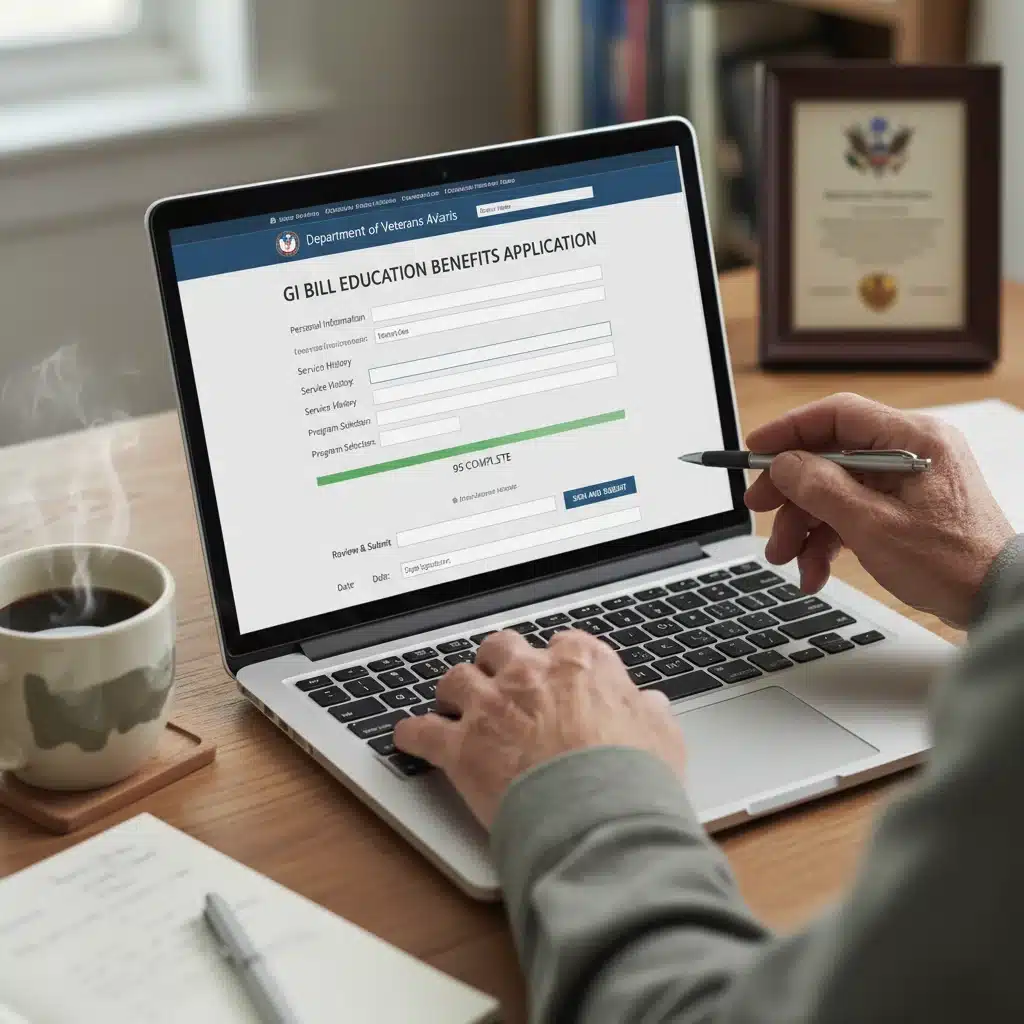
The application process for GI Bill benefits 2026 is straightforward, but requires attention to detail. The primary method is to apply online through the VA’s website. Here’s a general outline of the steps:
- Gather Necessary Documents: You’ll need your DD-214 (Certificate of Release or Discharge from Active Duty), service records, and school information.
- Apply Online: Complete VA Form 22-1990, ‘Application for VA Education Benefits,’ on the VA website. This is the most efficient way to apply.
- Receive Your Certificate of Eligibility (COE): Once your application is processed, the VA will send you a COE, which outlines your eligibility, percentage of benefits, and remaining entitlement. This document is essential for your school’s certifying official.
- Choose an Approved Program: Ensure the educational program and institution you select are approved for VA benefits. Most accredited colleges and universities are, but it’s always good to confirm.
- Enroll in School and Notify the VA Certifying Official: Once accepted into a program, contact your school’s VA certifying official (often located in the Registrar’s Office or a dedicated Veterans Services office). Provide them with your COE, and they will submit your enrollment information to the VA.
Starting this process early is highly recommended, as it can take several weeks for the VA to process applications and for your school to certify your enrollment. Proactive planning ensures your GI Bill benefits 2026 are ready when you are.
Strategic Planning to Maximize Your GI Bill Benefits 2026
Simply having GI Bill benefits 2026 is one thing; using them effectively to achieve your long-term goals is another. Strategic planning can significantly impact the value you derive from these benefits.
Choosing the Right Program and School
Your educational path should align with your career aspirations. Research different programs and institutions thoroughly. Consider factors such as:
- Accreditation: Ensure the school and program are accredited. This is crucial for the transferability of credits and the recognition of your degree.
- VA Approval: Verify that the program is approved for GI Bill use.
- Career Services: Look for schools with strong career services departments that specifically cater to veterans.
- Veteran Support Services: A robust veteran support center can make a significant difference in your academic success and transition.
- Yellow Ribbon Program Participation: If you’re attending a private or out-of-state public school, check if they participate in the Yellow Ribbon Program to cover additional costs.
Making an informed decision about your educational path is the cornerstone of maximizing your GI Bill benefits 2026.
Understanding Entitlement and Remaining Months
The Post-9/11 GI Bill provides 36 months of benefits. It’s critical to track your remaining entitlement. Each month you’re enrolled full-time uses one month of your benefits. If you’re enrolled half-time, it uses half a month of benefits. This understanding helps you plan your academic journey without running out of funds prematurely. You can check your remaining entitlement on the VA’s eBenefits portal.
Using Your Benefits for Different Types of Education
Your GI Bill benefits 2026 aren’t limited to traditional four-year degrees. They can be used for a wide array of educational and training opportunities:
- Undergraduate and Graduate Degrees: The most common use, covering associate’s, bachelor’s, master’s, and doctoral programs.
- Vocational/Technical Training: Programs that prepare you for specific trades or occupations, such as welding, automotive repair, or IT certifications.
- Non-College Degree Programs: This includes programs like flight training, apprenticeship, and on-the-job training.
- Licensing and Certification Tests: You can be reimbursed for the cost of approved tests.
- Correspondence Courses: For certain programs, benefits can be used for distance learning.
- National Testing Programs: Reimbursement for tests like SAT, GRE, GMAT, and others.
Exploring these diverse options allows you to tailor your education to your career goals, making the most of your GI Bill benefits 2026.
Leveraging Other Financial Aid
The GI Bill is a fantastic resource, but it might not cover every expense, especially for higher-cost programs or living in expensive areas. Always complete the Free Application for Federal Student Aid (FAFSA) to see if you qualify for federal grants, scholarships, or low-interest student loans. Many scholarships are specifically available for veterans. Combining your GI Bill benefits 2026 with other forms of financial aid can provide comprehensive financial coverage.
Common Pitfalls and How to Avoid Them
While the GI Bill benefits 2026 are incredibly generous, certain issues can arise. Being aware of these can help you navigate your educational journey smoothly.
Changing Schools or Programs
If you decide to change schools or switch your major, you must inform the VA and your school’s certifying official. This ensures your benefits continue without interruption. Failure to do so can lead to overpayments or delays in your MHA.
Satisfactory Academic Progress
To continue receiving your GI Bill benefits 2026, you must maintain satisfactory academic progress as defined by your institution. Falling below academic standards can result in the suspension of your benefits. Most schools have clear policies on academic probation and suspension, so familiarize yourself with them.
Overpayments and Debt to the VA
Overpayments can occur for various reasons, such as withdrawing from a course, dropping below full-time status, or administrative errors. If you receive an overpayment, the VA will typically seek repayment. It’s crucial to communicate promptly with your school’s certifying official and the VA about any changes in your enrollment status to prevent these issues. Ignoring overpayment notices can lead to serious financial consequences.
The 15-Year Delimiting Date
For the Post-9/11 GI Bill, there’s generally no time limit to use your benefits if you were discharged on or after January 1, 2013 (this is due to the ‘Forever GI Bill’ Act). However, if your last discharge date was before January 1, 2013, you typically have 15 years from your last date of active duty separation to use your benefits. It’s vital to know your specific delimiting date if applicable, to ensure you don’t lose out on your GI Bill benefits 2026.
Resources and Support for Veterans
Navigating the educational landscape can be complex, but numerous resources are available to support veterans utilizing their GI Bill benefits 2026.
VA.gov and eBenefits
The official VA website (VA.gov) is your primary resource for information, application forms, and managing your benefits. The eBenefits portal allows you to check your benefit status, remaining entitlement, and payment history. Regularly checking these platforms can help you stay informed and proactive.
School Certifying Officials (SCOs)
Every VA-approved school has a School Certifying Official (SCO) who is an expert on GI Bill benefits 2026. They are your direct link to the VA for enrollment certification, changes in status, and troubleshooting issues. Building a good relationship with your SCO is invaluable.
Veteran Service Organizations (VSOs)
Organizations like the American Legion, Veterans of Foreign Wars (VFW), Disabled American Veterans (DAV), and Student Veterans of America (SVA) offer free assistance and advocacy for veterans. They can help with understanding benefits, filing claims, and connecting you with other resources. Many VSOs have representatives specifically trained in education benefits.
Campus Veteran Centers
Many colleges and universities have dedicated veteran centers or lounges. These spaces provide a community for student veterans, offer academic support, and often have staff who can assist with GI Bill benefits 2026 questions or direct you to the appropriate resources.

Future Outlook for GI Bill Benefits Beyond 2026
While this guide focuses on GI Bill benefits 2026, it’s worth briefly considering the future. The GI Bill has a long history of adaptation and expansion to meet the evolving needs of veterans. While major legislative changes are not typically announced far in advance, the trend has been towards improving and extending benefits, particularly with the introduction of the ‘Forever GI Bill.’ It’s always advisable to stay updated through official VA communications and reputable veteran news sources for any future adjustments to policies or benefit structures. The commitment to supporting veterans’ education remains a strong priority, ensuring that the GI Bill continues to be a cornerstone of post-service success for years to come.
Conclusion: Empowering Your Educational Journey with GI Bill Benefits 2026
The GI Bill benefits 2026 represent an incredible opportunity for veterans to pursue their educational and career aspirations without the burden of significant financial debt. By understanding your eligibility, carefully navigating the application process, and strategically planning your academic path, you can maximize every dollar and every month of your entitlement. Remember to leverage the extensive support networks available, from your school’s certifying official to veteran service organizations. Your service has earned you these benefits; now, empower yourself to use them wisely and build a successful future. Education is a powerful tool, and with the GI Bill, it’s within your reach.
