Federal Reserve 0.25% Rate Hike: Impact on US Consumers
Anúncios
Federal Reserve’s Latest Decision: How a 0.25% Interest Rate Change Affects U.S. Consumers Now
The financial world often operates with a quiet hum of decisions made by powerful institutions that, while seemingly distant, ripple through the daily lives of millions. Among these, the Federal Reserve (often referred to simply as ‘the Fed’) stands as a colossus, its monetary policy decisions acting as a fulcrum for the entire U.S. economy. Recently, the Federal Reserve announced a modest but significant 0.25% interest rate hike. While a quarter of a percentage point might sound negligible to the uninitiated, its implications for the average U.S. consumer are anything but. Understanding the Federal Reserve impact is crucial for navigating your personal finances in the current economic climate.
This article will delve deep into the mechanics of this interest rate adjustment, explaining why the Fed made this move, and more importantly, how it directly translates to changes in your mortgage payments, credit card debt, savings accounts, and investment portfolios. We’ll explore strategies to mitigate potential downsides and capitalize on new opportunities, ensuring you are well-equipped to manage your financial well-being in the wake of this critical decision.
Understanding the Federal Reserve’s Role and the Latest Hike
Before we dissect the impact, let’s briefly revisit the Federal Reserve’s primary mandate. Established in 1913, the Fed serves as the central bank of the United States. Its dual mandate, as set by Congress, is to promote maximum employment and stable prices (low inflation). To achieve these goals, the Fed employs various monetary policy tools, with adjusting the federal funds rate being one of the most prominent.
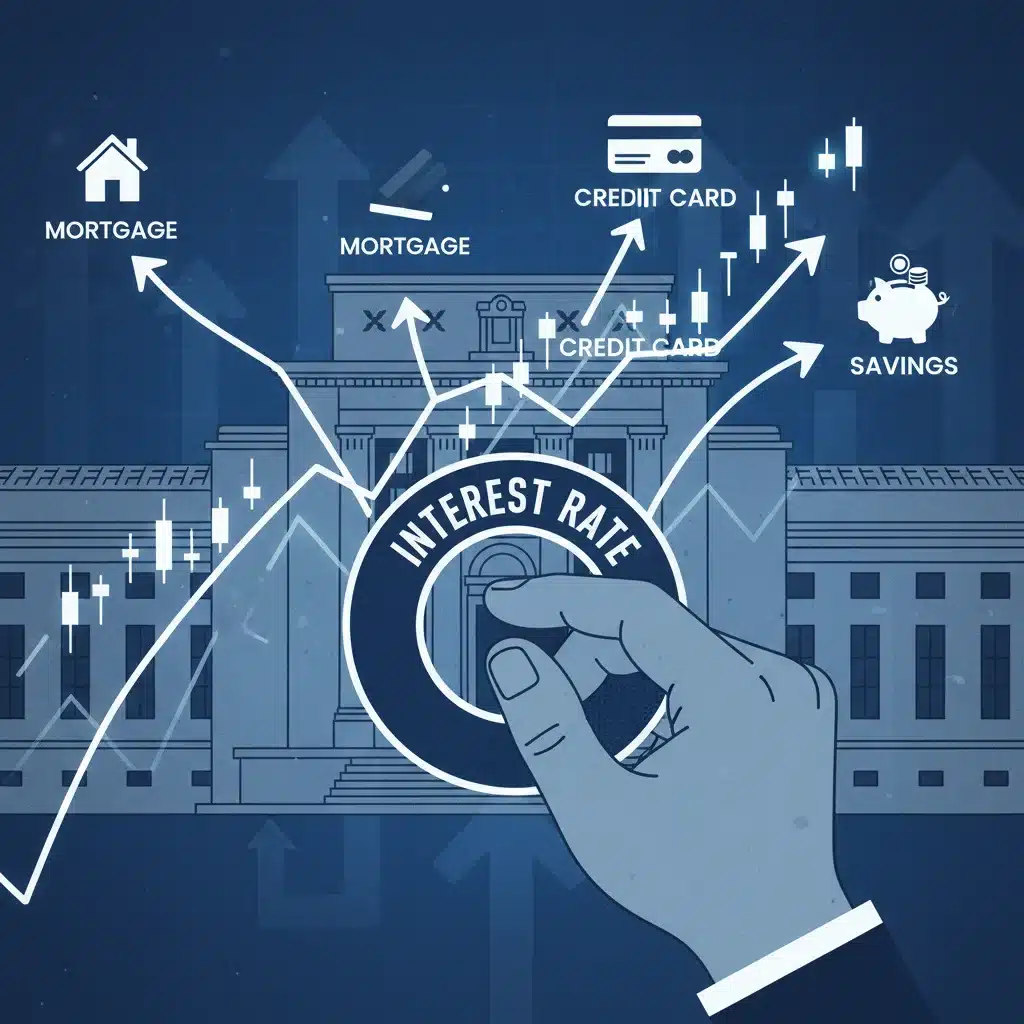
The federal funds rate is the target interest rate set by the Federal Open Market Committee (FOMC) at which commercial banks borrow and lend their excess reserves to each other overnight. While not directly what consumers pay, changes to this rate significantly influence other interest rates throughout the economy, from prime rates to mortgage rates and savings yields. The recent 0.25% increase signals the Fed’s ongoing efforts to combat inflation, which has been a persistent concern for the economy. By making borrowing more expensive, the Fed aims to cool down economic activity, thereby reducing demand and, consequently, price pressures.
This latest adjustment is part of a broader strategy that began some time ago, moving away from the ultra-low interest rates that characterized the post-2008 financial crisis and the COVID-19 pandemic. The decision to raise rates, even incrementally, reflects the Fed’s assessment of the current economic health, balancing the need to tame inflation against the risk of stifling economic growth. The Federal Reserve impact on the economy is always a delicate balance, and each decision is carefully weighed by policymakers.
The Immediate Impact on Your Borrowing Costs
Mortgages: A Direct Hit on Homeowners and Buyers
One of the most significant areas where consumers feel the immediate pinch of an interest rate hike is in the housing market. For prospective homebuyers, an increase in the federal funds rate typically translates to higher mortgage rates. A 0.25% rise might seem small, but over the life of a 30-year mortgage, it can add up to thousands of dollars in additional interest paid. For example, on a $300,000 mortgage, even a quarter-point increase could mean an extra $40-$50 per month, totaling over $14,000 to $18,000 over 30 years.
Existing homeowners with adjustable-rate mortgages (ARMs) will also likely see their monthly payments increase. ARMs are tied to an index, which often moves in tandem with the federal funds rate. If your ARM is due for a reset, prepare for a higher payment. This is a critical aspect of the Federal Reserve impact that many homeowners need to consider.
Conversely, those with fixed-rate mortgages are largely insulated from this particular hike, as their interest rate is locked in for the life of the loan. However, the overall housing market sentiment can still be affected, potentially leading to a slowdown in sales as affordability decreases for new buyers. This can, in turn, impact home values, though the relationship is complex and influenced by many factors beyond interest rates alone.
Credit Cards and Other Variable-Rate Loans
If you carry a balance on your credit cards, prepare for higher interest charges. Most credit cards have variable interest rates, meaning they are directly tied to the prime rate, which moves in lockstep with the federal funds rate. A 0.25% increase means your annual percentage rate (APR) will also likely go up by the same amount. For consumers with significant credit card debt, this can translate to a noticeable increase in monthly minimum payments and a longer time to pay off balances, costing more in the long run.
The same principle applies to other variable-rate loans, such as home equity lines of credit (HELOCs), personal lines of credit, and some student loans. If your loan has a variable interest rate, you can expect your payments to rise. This makes managing debt even more crucial. For example, a HELOC with a $50,000 balance could see its monthly interest payment increase by about $10.50 with a 0.25% hike, which, over time, adds up. Understanding this direct Federal Reserve impact is vital for budgeting.

The Upside: What About Your Savings and Investments?
Savings Accounts and Certificates of Deposit (CDs)
While borrowers face higher costs, savers might see a glimmer of good news. When the Fed raises rates, banks typically respond by increasing the interest rates they offer on savings accounts, money market accounts, and Certificates of Deposit (CDs). This means your money held in these accounts could start earning a bit more. However, the increase is often not immediate or perfectly proportional to the Fed’s hike, and smaller banks or online-only banks tend to be quicker to pass on rate increases to depositors.
For those with substantial savings, this can be a welcome development, as it helps offset the erosion of purchasing power caused by inflation. While a 0.25% increase might not dramatically change your financial outlook overnight, it contributes to a trend of higher yields that can make a difference over time. Shopping around for the best savings rates becomes even more important during these periods. This positive Federal Reserve impact for savers is a key consideration.
Bonds and Fixed-Income Investments
The bond market also reacts significantly to interest rate changes. When interest rates rise, newly issued bonds typically offer higher yields, making them more attractive to investors. However, existing bonds with lower fixed interest rates become less appealing, causing their market value to decrease. This is an important consideration for investors holding individual bonds or bond funds.
For those looking to invest in fixed-income securities, higher rates present an opportunity to lock in better returns. However, it also means that the value of current bond holdings might depreciate. Diversification and a long-term perspective are key strategies for navigating the bond market during periods of rising rates. The Federal Reserve impact on bond markets is complex, requiring careful analysis.
Stocks and Equities
The relationship between interest rates and the stock market is multifaceted. Generally, higher interest rates can be a headwind for stock prices. Here’s why:
- Higher Borrowing Costs for Companies: Businesses often rely on borrowing to fund operations, expansion, and investments. Increased interest rates mean higher costs of capital, which can eat into profit margins and reduce earnings.
- Reduced Consumer Spending: As borrowing becomes more expensive for consumers (mortgages, credit cards), they may have less discretionary income, leading to a slowdown in consumer spending. This can negatively impact companies that rely on consumer purchases.
- Alternative Investment Appeal: Higher interest rates on savings accounts and bonds can make these less risky investments more attractive compared to the stock market, potentially drawing some money away from equities.
- Valuation Impact: Higher interest rates are used in financial models to discount future earnings to their present value. A higher discount rate means future earnings are worth less today, potentially leading to lower stock valuations.
However, the stock market’s reaction is rarely straightforward. Strong corporate earnings, technological advancements, or positive economic data can often counteract the negative effects of rising rates. Certain sectors, such as financials (banks, insurers), might even benefit from higher rates as their lending margins improve. The overall Federal Reserve impact on the stock market depends on the specific economic context and market sentiment.
Navigating the New Financial Landscape: Strategies for Consumers
Given the 0.25% interest rate hike and the potential for further adjustments, U.S. consumers should proactively review their financial strategies. Here are some actionable steps:
1. Prioritize High-Interest Debt Repayment
With credit card APRs and other variable loan rates on the rise, tackling high-interest debt should be a top priority. Consider the ‘debt snowball’ or ‘debt avalanche’ method to systematically pay down balances. Consolidating high-interest debt into a lower-interest personal loan or a balance transfer card (if you can pay it off before the promotional period ends) might also be a viable option, but be mindful of fees and qualifying criteria. Reducing your debt load will lessen the sting of higher interest payments, directly mitigating the negative Federal Reserve impact on your budget.
2. Re-evaluate Your Mortgage Situation
If you have an adjustable-rate mortgage (ARM), now is a good time to assess whether refinancing into a fixed-rate mortgage makes sense, especially if you plan to stay in your home for the long term. While rates have risen, they might still be favorable compared to future potential increases. Consult with a mortgage professional to understand your options and the break-even point for refinancing costs versus interest savings.
For prospective homebuyers, carefully calculate affordability based on current and potentially higher mortgage rates. Don’t overextend yourself, and factor in potential future rate increases if considering an ARM.
3. Optimize Your Savings and Investments
Take advantage of higher savings rates. Shop around for high-yield savings accounts or CDs from online banks, which often offer better returns than traditional brick-and-mortar institutions. Even a slight increase in yield can significantly boost your earnings over time, especially on larger sums. This is where the positive Federal Reserve impact for savers can be harnessed.
Review your investment portfolio. If you’re heavily invested in long-term bonds, consider how rising rates might affect their value. Diversification across different asset classes (stocks, bonds, real estate, commodities) remains a cornerstone of prudent investing, helping to smooth out returns during volatile periods. For those with a long-term horizon, market dips caused by rate hikes can sometimes present buying opportunities.

4. Review Your Budget and Emergency Fund
Higher interest rates mean that the cost of living, directly or indirectly, can increase. Take this opportunity to review your household budget. Identify areas where you can cut back or optimize spending to free up funds for debt repayment or savings. Ensure your emergency fund is adequately stocked, ideally with three to six months’ worth of living expenses. A robust emergency fund provides a crucial buffer against unexpected expenses and economic uncertainties, making you more resilient to any negative Federal Reserve impact.
5. Consider Locking in Loan Rates
If you are planning to take out a new loan, such as a car loan or a personal loan, and you anticipate further rate increases, consider locking in a fixed rate now if possible. This can protect you from future payment hikes. Always compare offers from multiple lenders to ensure you’re getting the most competitive rate available.
Broader Economic Implications and Future Outlook
The Federal Reserve’s decision is not made in a vacuum; it’s a response to and an attempt to shape the broader economic landscape. While the primary goal is to combat inflation, there are always secondary effects. A slowdown in economic activity, while intended to curb inflation, could also lead to concerns about job growth and overall economic expansion.
The Fed’s future decisions will largely depend on incoming economic data, particularly inflation figures, employment reports, and consumer spending trends. If inflation remains stubbornly high, further rate hikes could be on the horizon. Conversely, if the economy shows signs of significant slowdown, the Fed might pause or even reverse its course. Staying informed about these economic indicators and the Fed’s communications is essential for anticipating future financial changes and understanding the ongoing Federal Reserve impact.
The global economic environment also plays a role. International trade, geopolitical events, and the monetary policies of other major central banks can all influence the Fed’s decisions and the U.S. economy’s trajectory. A strong dollar, often a consequence of higher U.S. interest rates, can make U.S. exports more expensive, potentially impacting certain industries.
Conclusion: Adaptability is Key
The Federal Reserve’s 0.25% interest rate hike is a clear signal of its commitment to price stability. For U.S. consumers, this means a shift in the financial landscape, particularly concerning borrowing costs and savings returns. While higher rates can be challenging for those with debt, they also present opportunities for savers and strategic investors.
The key takeaway is the importance of financial adaptability. Regularly reviewing your budget, debt, savings, and investment strategies is not just good practice but a necessity in a dynamic economic environment. By understanding the direct and indirect ways the Federal Reserve impact affects your finances, you can make informed decisions, mitigate risks, and position yourself for greater financial resilience. Stay informed, stay proactive, and adjust your financial sails to the prevailing economic winds.
This is not a one-time adjustment; the Fed’s monetary policy is an ongoing process. Being aware of these changes and their potential effects empowers you to take control of your financial future rather than being passively subjected to economic currents. Your financial health depends on your proactive engagement and informed choices in response to these critical policy shifts.
