FTC’s New Rules on Dark Patterns 2026: Identify, Report, and Comply with Recent Updates
Anúncios
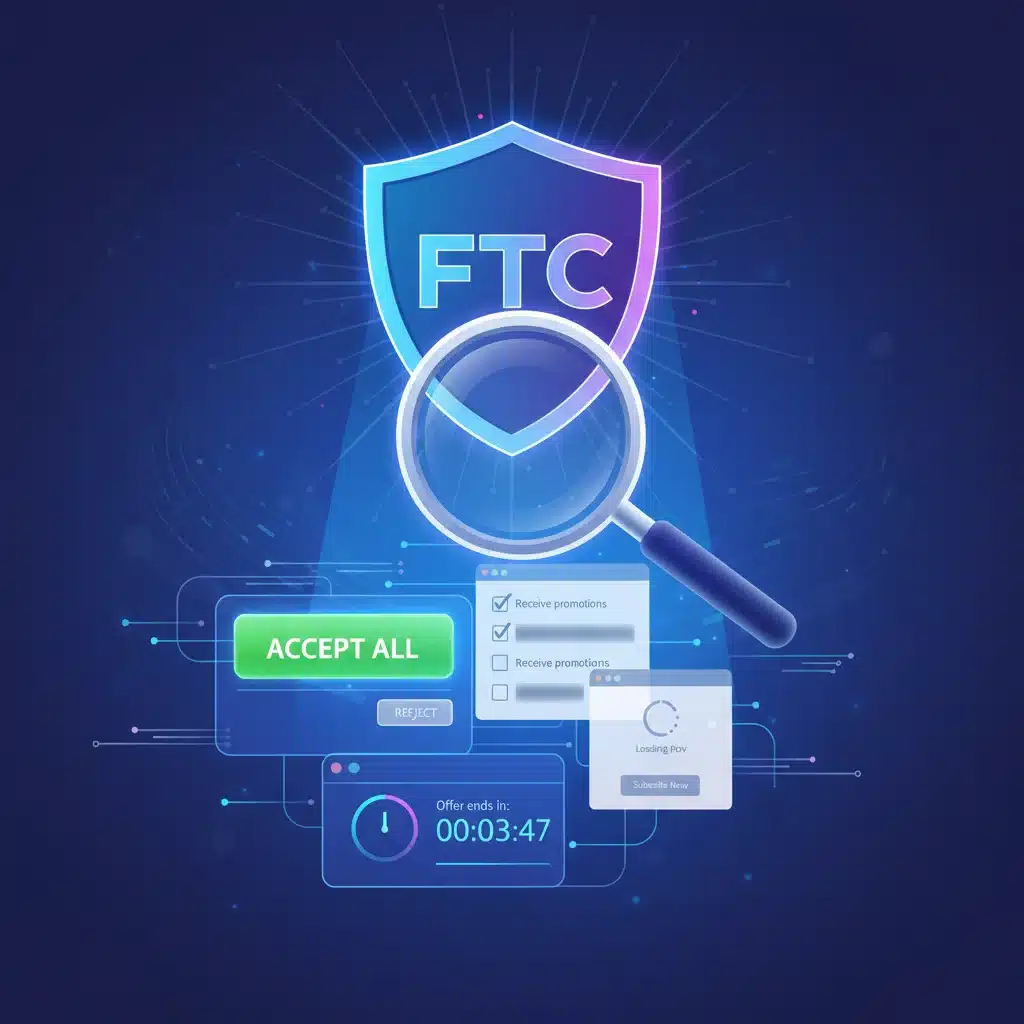
In the rapidly evolving digital landscape, where nearly every transaction and interaction has an online component, consumer trust is paramount. However, this trust is frequently eroded by insidious design choices known as ‘dark patterns.’ These deceptive tactics, often embedded within user interfaces, manipulate consumers into making decisions they wouldn’t otherwise make, ranging from unwanted purchases to involuntary data sharing. Recognizing the growing threat these designs pose, the Federal Trade Commission (FTC) has been intensifying its scrutiny, culminating in new rules anticipated to take full effect in 2026. Understanding these FTC Dark Patterns 2026 regulations is not just good practice; it’s becoming a legal imperative for businesses and a critical skill for consumers.
The Rise of Dark Patterns: A Brief History and Growing Concern
The term ‘dark patterns’ was coined by user experience (UX) designer Harry Brignull in 2010. Since then, their prevalence has exploded across e-commerce, social media, and various digital services. These patterns exploit cognitive biases and human psychology to trick users. They can range from subtle nudges to outright manipulative design choices, all with the goal of benefiting the business at the user’s expense.
Initially, regulators were slow to catch up, but the sheer volume and impact of dark patterns on consumer welfare have pushed them to the forefront of policy discussions. The FTC, as the primary consumer protection agency in the United States, has been increasingly vocal about its commitment to combating these deceptive practices. Their enforcement actions have become more frequent and the penalties more significant, signaling a clear shift towards stricter regulation. The upcoming FTC Dark Patterns 2026 rules are a direct response to this escalating problem, aiming to provide clearer guidelines and stronger enforcement mechanisms.
Why the FTC is Stepping Up Enforcement
The FTC’s enhanced focus stems from several key concerns:
- Consumer Harm: Dark patterns lead to financial losses, privacy breaches, and wasted time for millions of consumers annually.
- Market Distortion: They create an uneven playing field, allowing companies using deceptive tactics to gain an unfair advantage over ethical competitors.
- Erosion of Trust: Constant exposure to manipulative designs diminishes consumer trust in online platforms and businesses, hindering the growth of the digital economy.
- Technological Advancement: As AI and sophisticated data analytics become more integrated into design, the potential for highly personalized and effective dark patterns increases, making regulation more urgent.
The FTC Dark Patterns 2026 framework is designed to address these issues comprehensively, setting a new standard for online conduct.
Defining Dark Patterns Under the New FTC Rules
A crucial aspect of the FTC Dark Patterns 2026 guidelines is a clearer, more actionable definition of what constitutes a dark pattern. While the specific legal language will be refined, the core principles revolve around designs that:
- Materially Mislead: Designs that create a false impression or omit material information, leading consumers to make decisions they would not have made if fully informed.
- Substantially Interfere with Choice: Designs that make it unreasonably difficult or burdensome for consumers to exercise their choices, such as opting out of subscriptions or refusing data collection.
- Unfairly Influence: Designs that leverage psychological vulnerabilities or cognitive biases to pressure consumers into actions against their best interests.
It’s important to note that not all persuasive design is a dark pattern. The distinction lies in intent and outcome. Ethical persuasive design aims to help users achieve their goals efficiently, while dark patterns aim to trick or coerce users into actions that primarily benefit the business at the user’s expense.
Key Types of Dark Patterns Targeted by FTC Dark Patterns 2026
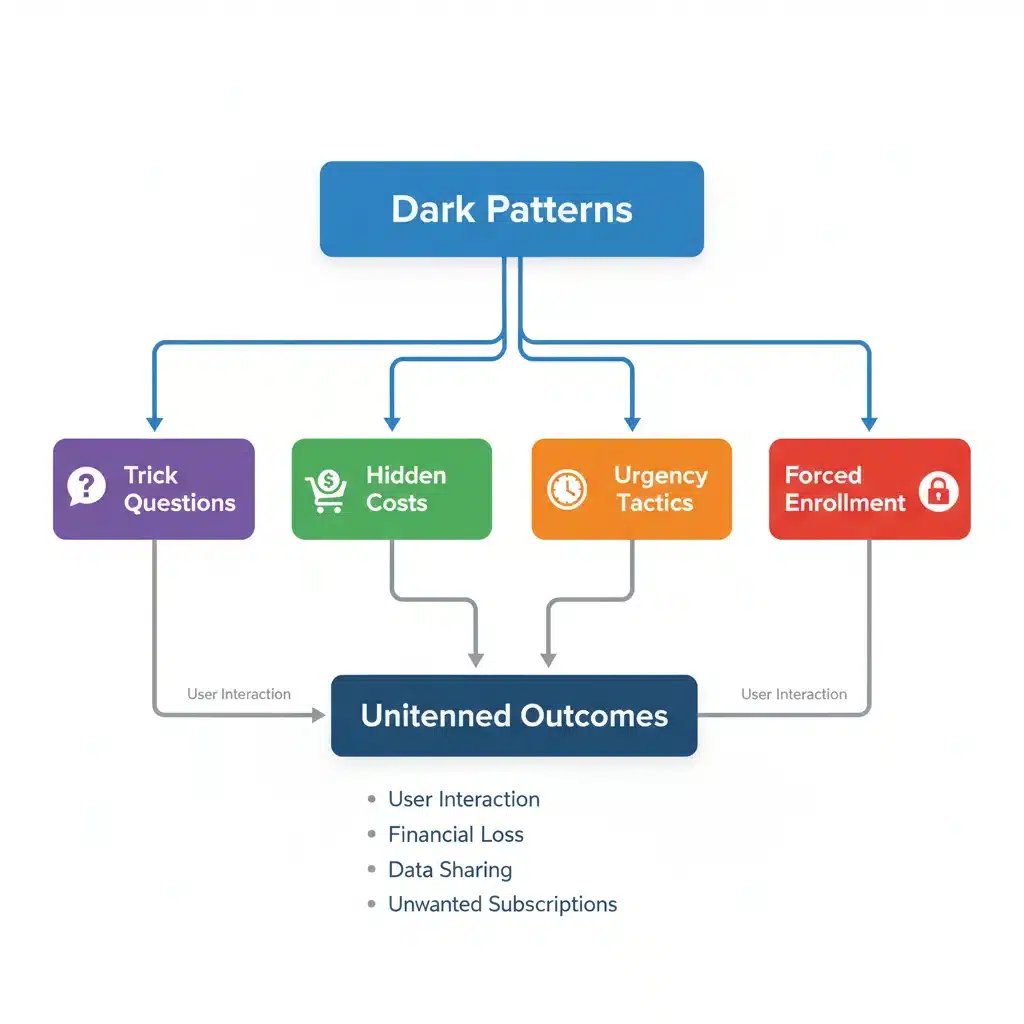
While dark patterns are diverse, the FTC Dark Patterns 2026 rules are expected to focus on categories that have historically caused significant consumer harm. Businesses and consumers alike should be vigilant about these common types:
1. Hidden Costs and Fees
This category includes designs that obscure additional charges until the very last stage of a transaction. Examples include:
- Drip Pricing: Showing an initial low price, then progressively adding mandatory fees (e.g., booking fees, service charges) as the user proceeds through checkout.
- Sneaking into Basket: Automatically adding unwanted items (e.g., insurance, extended warranties) to a user’s shopping cart without their explicit consent.
2. Forced Action and Obstruction
These patterns make it difficult for users to avoid certain actions or to exercise their rights, such as privacy choices.
- Confirmshaming: Guilt-tripping users into opting into something they might not want (e.g., ‘No thanks, I don’t want to save money’ as an opt-out option).
- Roach Motel: Easy to get into a situation, but hard to get out (e.g., making it simple to subscribe but exceedingly difficult to cancel, often involving multiple steps, hidden links, or phone calls).
- Privacy Zuckering: Tricking users into sharing more information than they intended (e.g., complex privacy settings that default to maximum sharing).
3. Urgency and Scarcity Tactics
These designs create a false sense of urgency or scarcity to pressure users into quick decisions, often without adequate consideration.
- Countdown Timers: Fake or artificially accelerated timers on sales or offers.
- Low Stock Messages: Fabricated or exaggerated claims about limited product availability (‘Only 2 left!’).
- High Demand Notifications: Messages like ‘150 people are looking at this right now!’ to create competitive pressure.
4. Misdirection and Visual Interference
These patterns use visual hierarchy, language, or placement to draw attention away from important information or towards a desired action.
- Misleading Buttons: Making the desired action (e.g., ‘Subscribe’) a prominent, brightly colored button, while the undesired action (e.g., ‘No thanks’) is a small, grey, text-only link.
- Trick Questions: Using double negatives or confusing phrasing to make users agree to something they don’t intend.
Compliance Strategies for Businesses Under FTC Dark Patterns 2026
For businesses, preparing for the FTC Dark Patterns 2026 rules is crucial to avoid hefty fines, reputational damage, and loss of consumer trust. Proactive compliance is key. Here are essential strategies:
1. Conduct a Comprehensive Dark Pattern Audit
The first step is to identify existing dark patterns within your digital properties. This requires a thorough review of your website, mobile apps, and any other online interfaces. Engage UX/UI designers, legal counsel, and compliance officers in this process. Look for:
- Any element that makes it harder for a user to opt out, cancel, or decline.
- Instances where pricing is not transparent upfront.
- Language that is ambiguous or designed to confuse.
- Pressure tactics that create false urgency or scarcity.
2. Prioritize Transparency and Clarity
The core principle of the FTC Dark Patterns 2026 rules is transparency. Ensure all information, especially regarding pricing, subscriptions, and data usage, is clear, prominent, and easily understandable. Avoid jargon and use plain language.
3. Empower User Choice
Users should have genuine control over their online experience. This means:
- Easy Opt-Outs: Make it as easy to cancel a subscription or opt out of data sharing as it was to sign up.
- Clear Consent: Obtain explicit, unambiguous consent for data collection and marketing communications. Pre-checked boxes are largely considered dark patterns.
- Symmetrical Choices: If you offer a prominent ‘Accept’ button, offer an equally prominent ‘Decline’ or ‘Manage Preferences’ option.
4. Ethical UX/UI Design Principles
Integrate ethical considerations into your design process from the outset. Train your design and development teams on dark patterns and the FTC Dark Patterns 2026 guidelines. Focus on user-centric design that prioritizes user goals and well-being over short-term business gains achieved through manipulation.
5. Regular Monitoring and Updates
The digital landscape is dynamic, and so are regulatory expectations. Establish a process for regularly reviewing your digital interfaces for new or evolving dark patterns. Stay informed about FTC guidance and enforcement actions.
6. Legal Counsel and Compliance Teams
Engage legal experts specializing in consumer protection and digital law to review your practices and ensure full compliance with the FTC Dark Patterns 2026 rules. A robust compliance framework can mitigate risks significantly.
How Consumers Can Identify and Report Dark Patterns
Consumers play a vital role in combating dark patterns. Being able to identify them and knowing how to report them can help the FTC enforce its new rules and protect others. The FTC Dark Patterns 2026 initiative relies heavily on consumer vigilance.
Identifying Dark Patterns: A Consumer Checklist
When interacting with websites or apps, ask yourself these questions:
- Is the pricing clear upfront? Are there unexpected fees added at checkout?
- Is it easy to say ‘no’ or opt out? Do I have to click through multiple screens or search for a tiny link?
- Am I being pressured to act quickly? Are there aggressive countdown timers or ‘limited stock’ warnings that seem fabricated?
- Does the language confuse me? Are there trick questions or double negatives designed to make me agree to something unintentionally?
- Are default settings automatically sharing my data or opting me into things I don’t want?
- Is it much harder to cancel a service than it was to sign up?
If the answer to any of these is ‘yes,’ you might be encountering a dark pattern.
Reporting Dark Patterns to the FTC
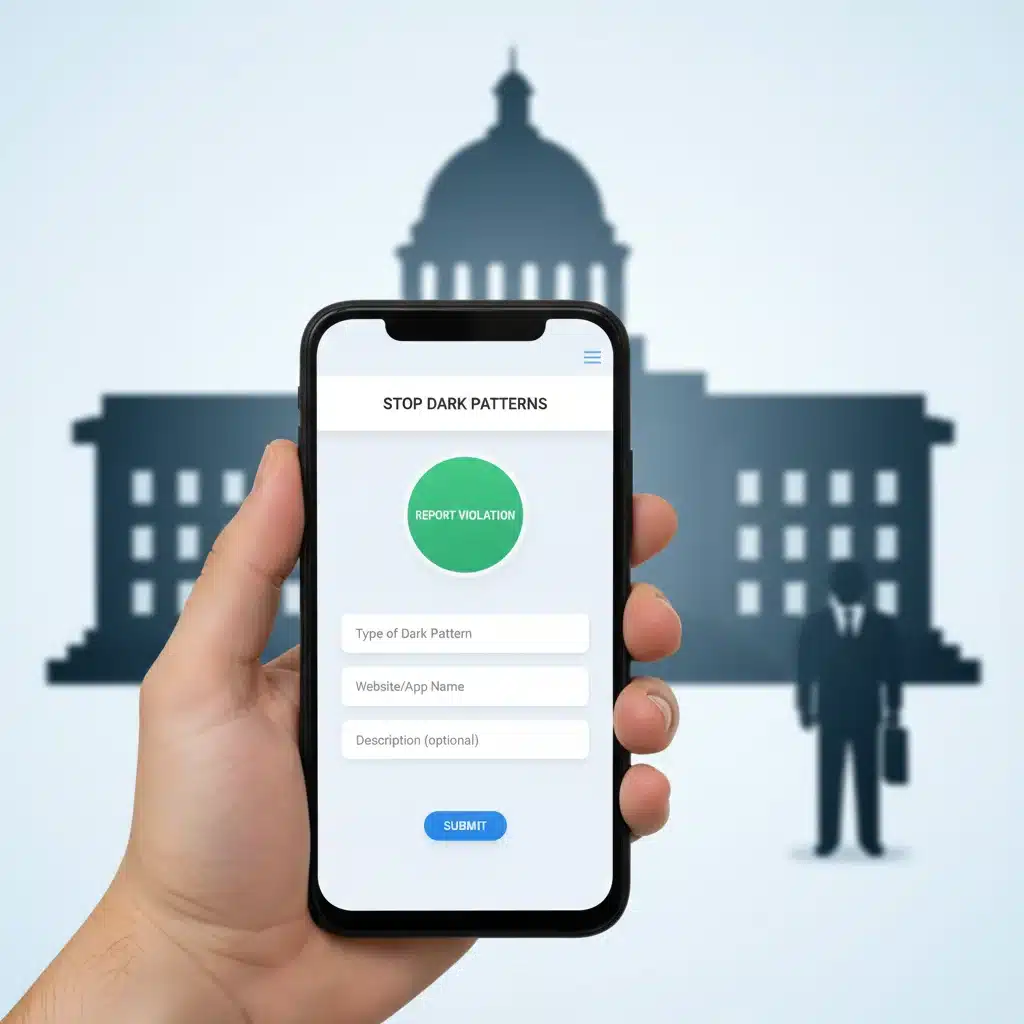
The FTC encourages consumers to report deceptive practices. Here’s how you can do it:
- Visit the FTC’s Website: Go to ReportFraud.ftc.gov. This is the primary portal for reporting all types of fraud and deceptive business practices.
- Provide Detailed Information: When reporting, be as specific as possible. Include:
- The name of the company or website.
- Screenshots or screen recordings of the dark pattern.
- The specific type of dark pattern you encountered (e.g., hidden fee, difficult cancellation).
- When and how it occurred.
- Any financial loss or harm suffered.
- Keep Records: Maintain your own records of the interaction, including emails, screenshots, and communication logs.
- Be Patient: The FTC receives a vast number of complaints. While they may not respond to every individual report, each submission helps them identify trends and build cases against repeat offenders.
The Future Landscape: Impact of FTC Dark Patterns 2026
The implementation of the FTC Dark Patterns 2026 rules is expected to have a profound impact on the digital economy. We anticipate several significant shifts:
1. Enhanced Consumer Trust and Safety
With clearer rules and stronger enforcement, consumers will likely feel more secure and confident in their online interactions. This can lead to increased engagement and spending in legitimate businesses.
2. A Level Playing Field for Businesses
Ethical businesses that prioritize transparency and user experience will no longer be at a disadvantage compared to competitors using manipulative tactics. This could foster greater innovation in genuinely user-friendly design.
3. Greater Accountability for Designers and Developers
The new rules will place a greater onus on UX/UI designers and developers to consider the ethical implications of their design choices. ‘Dark pattern’ will become a recognized legal term with serious consequences.
4. Potential for Industry-Wide Design Overhauls
Companies, particularly those with a history of employing dark patterns, will need to undertake significant redesigns of their digital interfaces to ensure compliance. This could be a costly but necessary investment.
5. Continued Evolution of Regulatory Frameworks
As technology advances, so too will the sophistication of deceptive designs. The FTC Dark Patterns 2026 rules are a significant step, but regulators will likely need to continue adapting and updating their approach to keep pace with new challenges.
Beyond the FTC: Global Efforts Against Dark Patterns
It’s important to remember that the FTC is not alone in this fight. Other regulatory bodies worldwide are also cracking down on dark patterns:
- European Union: The Digital Services Act (DSA) and General Data Protection Regulation (GDPR) already contain provisions that address dark patterns, particularly concerning consent and data privacy.
- California (USA): The California Consumer Privacy Act (CCPA) and its amendments (CPRA) also target dark patterns related to privacy choices.
- United Kingdom: The Competition and Markets Authority (CMA) has investigated and taken action against dark patterns in various sectors.
Businesses operating globally must therefore consider a patchwork of regulations, with the FTC Dark Patterns 2026 rules adding another critical layer of compliance.
Conclusion: Navigating the Ethical Digital Frontier
The upcoming FTC Dark Patterns 2026 rules mark a pivotal moment in the ongoing effort to create a safer, more transparent, and more trustworthy digital environment. For businesses, this is a call to action to review, revise, and commit to ethical design practices. Proactive compliance will not only prevent legal penalties but also build stronger, more loyal customer relationships. For consumers, these rules empower them with greater protection and the tools to identify and report manipulative designs, fostering a collective effort to hold companies accountable.
Ultimately, the goal is to shift the digital landscape from one where manipulation is tolerated to one where user autonomy and transparency are the guiding principles. By understanding and adhering to the FTC Dark Patterns 2026 guidelines, both businesses and consumers can contribute to a more ethical and user-friendly online world.
