Navigating 2026: Essential Consumer Protections Against Hidden Fees
Anúncios
In an increasingly complex marketplace, consumers are constantly on the lookout for unexpected costs that can significantly inflate the price of goods and services. These insidious charges, often referred to as hidden fees, can turn an seemingly affordable purchase into a budget-busting expense. As we approach 2026, a new wave of consumer protections is on the horizon, designed specifically to combat this pervasive issue and empower individuals to make more informed financial decisions. Understanding these forthcoming regulations and adopting proactive strategies for avoiding hidden fees will be paramount for financial well-being.
The landscape of consumer finance is ever-evolving, with new technologies and service models introducing novel ways for companies to levy charges that aren’t immediately apparent. From banking and travel to subscription services and utility bills, hidden fees lurk in various corners of our economic lives. The good news is that legislative bodies and consumer advocacy groups are actively working to shine a light on these practices, pushing for greater transparency and accountability. This article will delve into the critical consumer protections slated for 2026, providing a comprehensive guide on how to identify, challenge, and ultimately succeed in avoiding hidden fees in your everyday transactions.
The Pervasive Problem of Hidden Fees
Hidden fees are more than just an annoyance; they represent a significant drain on household budgets and erode consumer trust. These charges can manifest in countless forms: ‘resort fees’ at hotels, ‘convenience fees’ for online ticket purchases, ‘early termination fees’ for contracts, ‘overdraft fees’ at banks, and even obscure ‘administrative charges’ tacked onto utility bills. The common thread among them is their lack of upfront disclosure, often buried in fine print or only revealed at the final stage of a transaction.
The impact of these fees is substantial. A seemingly small service charge can add up over time, especially when applied across multiple services or repeated transactions. For individuals and families living paycheck to paycheck, even a few unexpected dollars can throw off a carefully balanced budget. Moreover, the psychological effect of feeling misled or exploited can lead to frustration and a sense of powerlessness. This is precisely why the push for stronger consumer protections against hidden fees is gaining momentum, culminating in the anticipated changes for 2026.
Historically, the onus has largely been on the consumer to meticulously scrutinize every detail of a contract or purchase. While vigilance remains crucial, the upcoming regulations aim to shift some of that responsibility back to service providers, demanding greater transparency from the outset. This shift is not merely about fairness; it’s about fostering a more equitable and efficient marketplace where consumers can make decisions based on clear, comprehensive information, thereby effectively avoiding hidden fees.
Key Consumer Protections for 2026: What to Expect
As we look towards 2026, several legislative and regulatory initiatives are expected to come into full effect, significantly strengthening consumer defenses against hidden fees. While the exact details may vary by jurisdiction, the overarching themes include enhanced disclosure requirements, limitations on certain types of fees, and increased enforcement powers for regulatory bodies. These changes are a direct response to years of advocacy from consumer groups and a growing public outcry against deceptive pricing practices.
Enhanced Transparency and Disclosure
One of the most significant anticipated changes revolves around transparency. New regulations are likely to mandate that all fees, including those previously considered ‘hidden,’ must be clearly and conspicuously disclosed at the earliest possible point of interaction. This means that when you’re browsing for a flight, booking a hotel, or signing up for a new service, the total cost, inclusive of all non-optional fees, should be presented upfront, not just the base price. This ‘all-in pricing’ model is a game-changer for avoiding hidden fees.
- Mandatory ‘All-In’ Pricing: Expect to see prices advertised that reflect the total cost, including all mandatory fees, before taxes. This will apply across various sectors, from travel and hospitality to event ticketing.
- Standardized Fee Descriptions: Regulators may push for more standardized terminology for common fees, making it easier for consumers to understand what they are paying for and compare services across different providers.
- Clear Justification for Fees: In some cases, companies might be required to provide a clear and understandable justification for certain fees, especially those that appear arbitrary or disproportionate to the service provided.
These disclosure requirements are not just about showing the fees; they’re about presenting them in a way that is easily digestible and prevents consumers from being ambushed at checkout. The goal is to eliminate the ‘drip pricing’ phenomenon, where the price slowly increases as additional fees are added throughout the purchasing process.
Restrictions on Certain Fee Types
Beyond disclosure, 2026 may also bring direct restrictions or outright bans on specific types of fees deemed unfair or predatory. While a blanket ban on all fees is unlikely, particular charges that offer little to no value to the consumer or are excessively high could be targeted. For instance, the contentious ‘junk fees’ that have drawn significant criticism from policymakers are prime candidates for such restrictions.
- Limits on Overdraft Fees: Financial institutions may face stricter limits on the number and amount of overdraft fees they can charge, or even be required to offer opt-out options for overdraft protection.
- Caps on Late Payment Penalties: Regulations could introduce caps on the maximum late payment fees for credit cards, loans, and other services, preventing disproportionate penalties.
- Scrutiny of Service Fees: Fees for basic services that were once free or minimal, such as balance inquiries or paper statements, might come under greater scrutiny, with some potentially being prohibited.
These restrictions aim to protect vulnerable consumers who are often disproportionately affected by these charges. By setting boundaries on what companies can charge and how much, these protections will provide a stronger financial safety net and make avoiding hidden fees a more attainable goal for everyone.
Increased Enforcement and Consumer Recourse
New regulations are only as effective as their enforcement. For 2026, there’s an expectation of bolstered enforcement mechanisms and improved avenues for consumer recourse. This means that regulatory bodies will likely have more resources and clearer mandates to investigate complaints and penalize companies that fail to comply with the new transparency and fee restriction rules.
- Stronger Regulatory Powers: Government agencies responsible for consumer protection are expected to receive enhanced powers to audit companies, issue fines, and compel restitution to affected consumers.
- Easier Complaint Mechanisms: Efforts may be made to streamline the process for consumers to file complaints about hidden fees, ensuring that their grievances are heard and acted upon efficiently.
- Collective Action Facilitation: There could be measures to make it easier for consumers to join collective actions or class-action lawsuits against companies engaging in widespread deceptive fee practices.
The prospect of significant penalties will act as a strong deterrent for companies considering non-compliance. Furthermore, knowing that there are effective channels for recourse will empower consumers to challenge unfair fees with greater confidence, reinforcing the ability to succeed in avoiding hidden fees.

Proactive Strategies for Consumers in 2026
While new regulations will provide a stronger framework, consumers still play a vital role in protecting themselves. Being informed and proactive remains the best defense against hidden fees. Here are some essential strategies to adopt in 2026 and beyond:
Read the Fine Print (Still!):
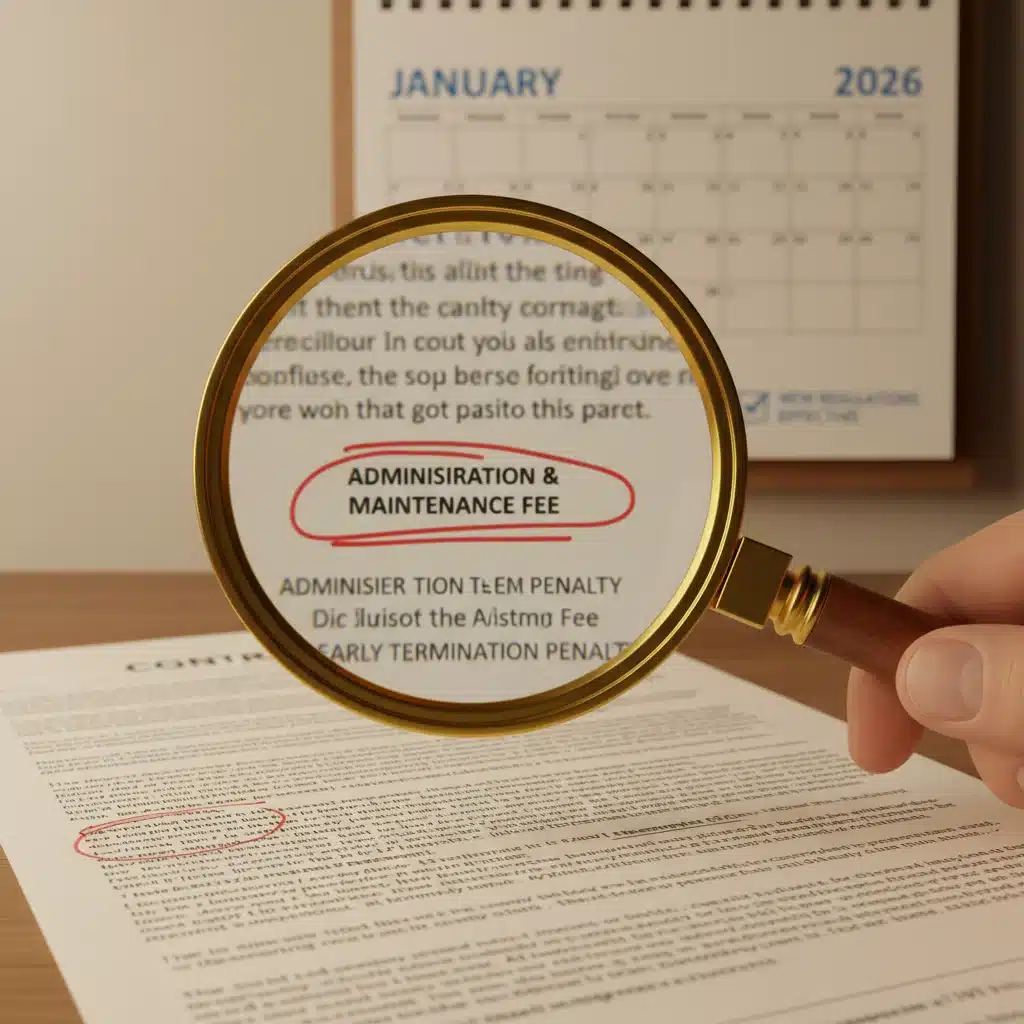
Even with enhanced disclosure, the devil can still be in the details. Always take the time to read terms and conditions, especially for significant purchases or long-term contracts. Look specifically for sections related to ‘fees,’ ‘charges,’ ‘penalties,’ and ‘cancellation policies.’ Don’t assume that because a fee isn’t prominently displayed, it doesn’t exist. Your diligence is key to avoiding hidden fees.
Ask Direct Questions:
When in doubt, ask! Before committing to a service or purchase, directly inquire about all potential fees. Ask specific questions like: ‘Are there any other fees not included in this price?’ ‘What are the cancellation fees?’ ‘Are there any monthly maintenance fees?’ Get answers in writing whenever possible, especially for services with complex pricing structures. This proactive approach can prevent many surprises.
Utilize Comparison Tools:
Leverage online comparison websites and tools that are designed to show the total cost of services, including all mandatory fees. As regulations improve, these tools will become even more accurate and useful. Comparing multiple providers not just on their advertised base price but on their final, all-inclusive price is critical for truly avoiding hidden fees.
Monitor Your Statements Regularly:
Don’t just glance at your bank statements, credit card bills, and utility invoices. Scrutinize them line by line for unfamiliar charges. If you spot anything suspicious or unexplained, contact the provider immediately for clarification. Catching an erroneous or hidden fee early can save you significant hassle and money.
Understand Common Fee Hotspots:
Be particularly wary in sectors known for hidden fees. These include:
- Travel: Airline baggage fees, seat selection fees, hotel resort fees, booking fees.
- Financial Services: Overdraft fees, ATM fees, foreign transaction fees, account maintenance fees, late payment fees.
- Telecommunications: Early termination fees, equipment rental fees, administrative fees, data overage charges.
- Subscription Services: Automatic renewal charges, cancellation fees, ‘convenience’ fees for online management.
By knowing where to look, you can be better prepared for avoiding hidden fees.
Keep Records:
Maintain records of your purchases, contracts, and any communications with service providers regarding fees. This documentation will be invaluable if you need to dispute a charge or file a complaint. Digital copies are often sufficient and easier to store.
The Role of Technology in Avoiding Hidden Fees
Technology is not just a source of new services; it’s also becoming a powerful ally for consumers in the fight against hidden fees. In 2026, we can expect even more sophisticated tools to emerge, helping individuals navigate complex pricing structures and protect their financial interests.
AI-Powered Financial Assistants:
Artificial intelligence (AI) is already being integrated into personal finance apps. In the future, these AI assistants will become even more adept at analyzing your spending patterns, identifying recurring fees, and flagging unusual or potentially hidden charges on your statements. They could even alert you to upcoming renewal fees for subscriptions, giving you time to cancel if desired.
Browser Extensions and Apps:
Expect to see more browser extensions and mobile apps specifically designed to reveal hidden fees at the point of sale. These tools could automatically scan websites for fine print, calculate the ‘all-in’ price of a product or service, and even compare it with competitors, providing a clearer picture before you commit. This direct intervention at the time of decision-making will be invaluable for avoiding hidden fees.
Blockchain for Transparency:
While still in nascent stages for consumer finance, blockchain technology holds promise for creating immutable and transparent records of transactions and contracts. This could potentially reduce disputes over fees by providing an unalterable ledger of agreed-upon terms, making it much harder for companies to introduce undeclared charges.
Automated Negotiation Tools:
Some emerging platforms are experimenting with automated negotiation tools that can help consumers challenge fees or negotiate better terms. While not yet mainstream, the idea of an AI agent advocating on your behalf for the removal of an unfair fee is an exciting prospect for the future of consumer protection.

Case Studies: Impact of New Regulations
To illustrate the potential impact of these 2026 consumer protections, let’s consider a few hypothetical scenarios:
Scenario 1: The ‘All-In’ Travel Booking
Under current rules, a consumer might see an advertised flight price of $200. After adding baggage, seat selection, and a ‘booking convenience fee,’ the total could easily jump to $300+. In 2026, with ‘all-in’ pricing mandates, the initial advertised price for that flight, including all non-optional fees, would be $300. This upfront transparency allows the consumer to compare true costs across airlines immediately, making avoiding hidden fees during travel much simpler.
Scenario 2: Banking Without Surprise Overdrafts
A consumer accidentally overdraws their bank account by a small amount. In the past, this could trigger multiple overdraft fees if several transactions processed before they noticed. With 2026 regulations, the bank might be limited to one overdraft fee per statement cycle, or the consumer could have opted into a service that automatically declines transactions if funds are insufficient, completely avoiding hidden fees related to overdrafts.
Scenario 3: Transparent Subscription Renewals
Many consumers forget about recurring subscriptions and are hit with unexpected annual renewal fees. New protections could mandate that companies send clear, prominent notifications several weeks before an automatic renewal, detailing the charge and providing an easy option to cancel. This empowers consumers to review their subscriptions and prevent unwanted charges.
These examples highlight how the combination of regulatory changes and increased consumer awareness can create a more predictable and fair financial environment, making substantial progress in avoiding hidden fees.
Challenges and Future Outlook
While the outlook for consumer protection in 2026 is promising, challenges will undoubtedly remain. Companies may seek new ways to circumvent regulations, and the digital landscape is constantly evolving, presenting new avenues for complex pricing. Continuous vigilance from both regulators and consumers will be essential.
Moreover, effective implementation of these new rules will require robust oversight and clear communication to both businesses and the public. Education campaigns will be crucial to ensure that consumers are aware of their new rights and how to exercise them. The goal is not just to impose rules but to foster a culture of transparency and fairness throughout the marketplace.
Looking further ahead, the trend towards greater transparency and consumer empowerment is likely to continue. As data analytics become more sophisticated, regulators will be better equipped to identify patterns of deceptive pricing. Similarly, consumers, armed with better tools and information, will become more adept at identifying and challenging unfair practices. The journey to completely eliminate hidden fees is long, but 2026 marks a significant milestone in that direction.
Conclusion: Empowering Consumers for a Transparent Future
The arrival of 2026 heralds a new era for consumer protection, particularly in the realm of avoiding hidden fees. With enhanced transparency requirements, potential restrictions on certain predatory charges, and stronger enforcement mechanisms, consumers will be better equipped than ever to navigate the complexities of the modern marketplace. However, these protections are most effective when combined with informed and proactive consumer behavior.
By understanding the new regulations, diligently reading terms, asking direct questions, and leveraging available technological tools, individuals can significantly reduce their exposure to unexpected costs. The collective effort of legislators, regulators, advocacy groups, and informed consumers will ultimately drive a more equitable and transparent financial ecosystem. As we move forward, the ability to identify and challenge hidden fees will not just be a skill but a fundamental right, ensuring that the price you see is truly the price you pay.
Stay informed, stay vigilant, and embrace the new tools and protections available to you. Your financial future depends on your ability to effectively champion your rights and master the art of avoiding hidden fees.
