
Understanding the 3-Day Rule: Your Right to Cancel Certain Contracts in 2026 (FINANCIAL IMPACT)
In the intricate world of consumer transactions, the ability to change your mind after committing to a significant purchase or service can be a lifesaver. This is where the often-discussed ‘3-day rule’ comes into play. For many consumers, this rule serves as a critical safeguard, providing a limited window to cancel certain contracts without penalty. As we navigate through 2026, understanding the nuances of this consumer protection, its scope, and its financial implications is more important than ever. This comprehensive guide will delve deep into the 3-day contract cancellation rule, empowering you with the knowledge to protect your interests and make informed decisions.
The concept of a cooling-off period is not new. It’s a fundamental aspect of consumer law designed to protect individuals from high-pressure sales tactics or hasty decisions. While often generalized as the ‘3-day rule,’ its official designation and application can vary depending on the type of contract and jurisdiction. Our focus will be on the federal regulations that establish this right, as well as common state-level applications that consumers are likely to encounter. We’ll explore which specific contracts fall under this umbrella, what steps you need to take to exercise your right, and crucially, the financial ramifications of doing so.
Whether you’ve just signed up for a new service, made a large purchase from a door-to-door salesperson, or are considering a home equity loan, knowing your rights regarding 3-day contract cancellation can save you from potential financial distress and regret. This article aims to demystify the legal jargon and provide clear, actionable insights into this vital consumer protection mechanism for 2026.
What Exactly is the 3-Day Rule? A Consumer Protection Overview
At its core, the 3-day rule, often referred to as the ‘cooling-off rule,’ provides consumers with the right to cancel certain sales within three business days without giving a reason and without penalty. This federal regulation, primarily enforced by the Federal Trade Commission (FTC), aims to protect consumers from impulse purchases or aggressive sales tactics, especially those that occur outside of a seller’s usual place of business. It’s a recognition that some sales environments can be inherently high-pressure, leading consumers to make decisions they might later regret.
The significance of this rule cannot be overstated. It offers a critical safety net, allowing individuals to reconsider their commitments in a calmer environment. Imagine a scenario where a salesperson visits your home, offering a deal that seems too good to be true. Under pressure, you might sign a contract on the spot. The 3-day rule grants you the invaluable time to research, consult with others, and ultimately decide if the contract is truly in your best interest. This period is not merely a courtesy; it’s a legally mandated right designed to level the playing field between consumers and businesses.
However, it’s crucial to understand that the 3-day contract cancellation rule does not apply to all contracts. This is a common misconception that can lead to confusion and frustration. The rule’s application is specific, targeting particular types of sales where the consumer might be at a disadvantage. We will elaborate on these specific contract types in the following sections. For 2026, the core principles of this rule remain steadfast, though consumers should always be aware of any potential legislative updates or state-specific variations that could impact its application.
The rule specifies ‘business days,’ which typically means Monday through Saturday, excluding Sundays and federal holidays. This detail is important for calculating your cancellation window accurately. If the last day of your cancellation period falls on a Sunday or a holiday, your deadline usually extends to the next business day. Always mark your calendar and understand the exact deadline to ensure you don’t miss your opportunity to cancel.
Which Contracts Are Covered by the 3-Day Rule in 2026?
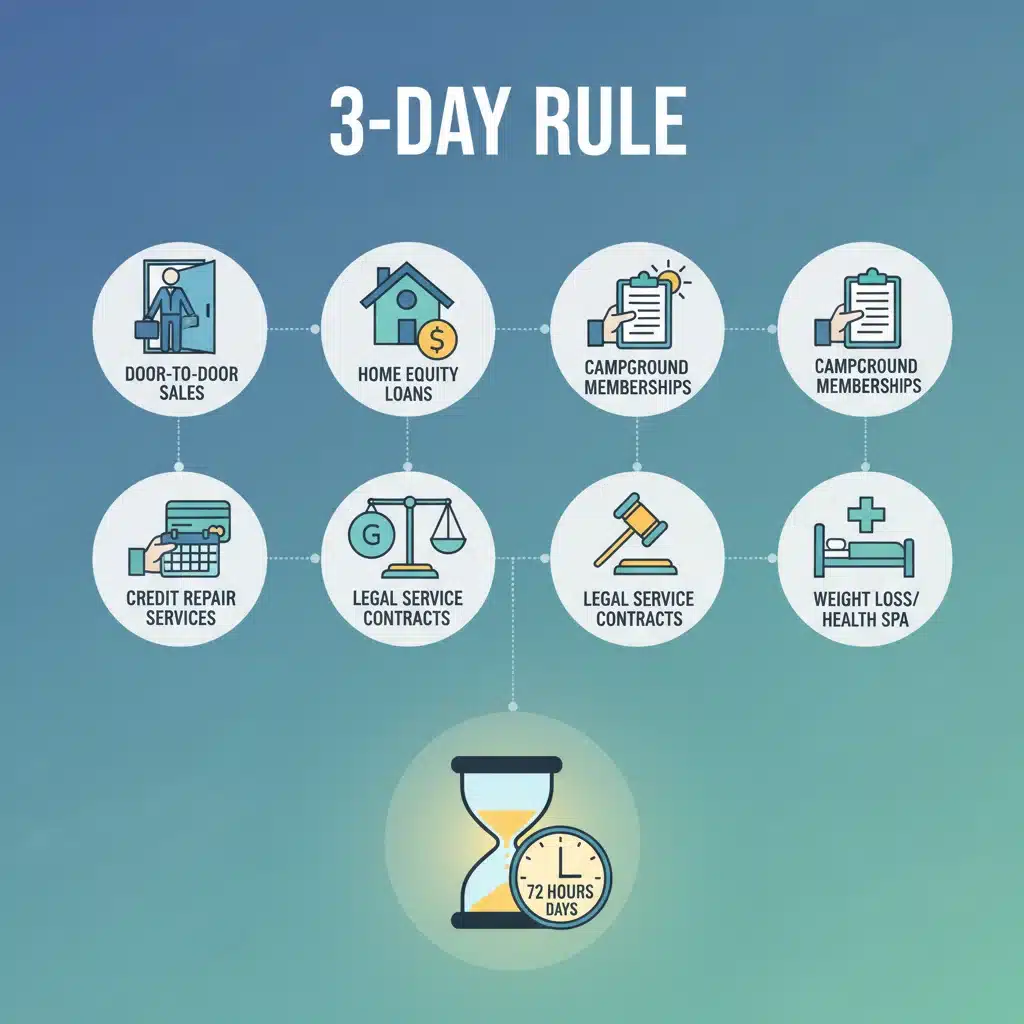
One of the most frequent questions consumers have is, ‘Does the 3-day rule apply to my contract?’ The answer, as mentioned, is not a blanket yes. The federal 3-day contract cancellation rule specifically covers sales made at your home, workplace, dormitory, or at a seller’s temporary location, such as a hotel, motel, convention center, fairground, or restaurant. These are typically referred to as ‘door-to-door sales’ or ‘off-premises sales.’ The rationale behind this is the belief that consumers are more vulnerable to high-pressure sales tactics when approached outside of a traditional retail setting where they might have more time and less pressure to make a decision.
Key categories of contracts that are generally covered include:
- Door-to-Door Sales: This is the most classic example. If a salesperson comes to your home and sells you something, you likely have the right to cancel within three business days. This could include anything from vacuum cleaners and encyclopedias to home improvement services.
- Home Improvement Contracts: Often, contracts for repairs, remodeling, or insulation services initiated at your home are covered. This provides a crucial protection for homeowners making significant investments.
- Timeshare Resales: While initial timeshare purchases often have their own state-specific cooling-off periods (which can be longer than three days), certain timeshare resale contracts might fall under the FTC’s rule if they meet the off-premises criteria.
- Emergency Home Repairs: There’s an important exception here. If you initiate contact with the seller for emergency home repairs and waive your cancellation rights to get immediate service, the 3-day rule might not apply. However, this waiver must be explicit and for genuine emergencies.
- Home Equity Loans and Refinancing: Under the Truth in Lending Act (TILA, consumers have a three-business-day right of rescission for certain home equity loans, lines of credit, and refinancing transactions, provided it’s a new loan with a new lender or an increase in an existing line of credit. This is a critical protection for homeowners using their primary residence as collateral.
It’s important to differentiate between the FTC’s Cooling-Off Rule and other state-specific cancellation rights. Many states have their own laws that extend cancellation rights to other types of contracts, such as health club memberships, dating services, and vocational school enrollments. Always check your state’s consumer protection laws for a complete picture of your rights. For 2026, these state-level protections continue to complement the federal rule, offering broader consumer safeguards.
Contracts Not Covered by the 3-Day Rule
Equally important as knowing what is covered is understanding what is not. Misconceptions about the 3-day contract cancellation rule often lead to consumer disappointment when they discover their particular contract does not qualify. Generally, the federal rule does NOT cover:
- Sales made at a seller’s regular place of business: If you walk into a store and buy something, you typically do not have a federal 3-day right to cancel. Store return policies govern these transactions.
- Sales under $25 for goods or under $130 for services: The FTC rule has minimum dollar thresholds.
- Sales of real estate, insurance, or securities: These are governed by other specific laws and regulations.
- Sales for emergency home repairs: As mentioned, if you call for an emergency repair and waive your rights, it’s typically not covered.
- Sales made entirely by mail or telephone: These types of transactions have different consumer protections.
- Sales for which you initiated contact and the goods/services are needed to meet a bona fide personal emergency: This is a narrow exception.
- Motor vehicles: Car sales, whether new or used, typically do not fall under the federal 3-day rule. Some states might have specific laws for used car purchases, but it’s not a universal right.
- Art or craft items sold at fairs or similar locations: If the sale is under $25, it’s generally not covered.
It’s crucial to reiterate that while the federal rule has these limitations, individual states may offer broader protections. Therefore, if you find yourself in a situation where you believe you need to cancel a contract, always research both federal and state laws. A quick search for ‘consumer protection laws [your state]’ can often provide valuable information. For 2026, these distinctions remain critical for consumers to correctly assess their rights.
How to Exercise Your 3-Day Contract Cancellation Right
If your contract is indeed covered by the 3-day contract cancellation rule, exercising your right is straightforward, but requires diligence. The seller is legally required to provide you with two copies of a cancellation form (notice of cancellation) at the time of the sale. One copy is for your records, and the other is to send back to the seller if you decide to cancel.
Here are the steps to follow:
- Locate the Cancellation Form: Ensure the seller provided you with the required cancellation forms. These forms should clearly state your right to cancel and provide instructions.
- Fill Out the Form: Complete the cancellation form accurately. Make sure to date it.
- Send Your Notice: You must send the cancellation notice by midnight of the third business day after the contract date. The FTC recommends sending it by certified mail, return receipt requested. This provides proof that you sent the notice and that the seller received it. You can also send it via regular mail, but certified mail offers undeniable proof. Keep a copy of the signed cancellation form and your proof of mailing.
- Return Goods (if applicable): If you received any goods from the seller, you must make them available for the seller to pick up. The seller has 20 days to pick up the items or they become yours to keep. You are not obligated to return the goods to the seller’s place of business.
- Expect a Refund: Once you cancel, the seller has 10 days to cancel the contract, return any money you paid, return any trade-in property, and inform you whether they intend to pick up any goods.
Do not rely on verbal cancellations. Always put your cancellation in writing and send it in a way that provides proof of delivery. This is your best defense if a dispute arises. For home equity loans, the process is similar; you must provide written notice to the lender within the three-day rescission period. The lender then has 20 calendar days to return all money or property given to anyone in connection with the transaction and release any security interest in your home.
Financial Impact of the 3-Day Rule: What to Expect
The financial implications of exercising your 3-day contract cancellation right are generally positive, as the rule is designed to allow you to walk away without financial penalty. However, understanding the specifics is key:
Refunds and Payments
When you successfully cancel a contract under the 3-day rule, the seller is obligated to refund all money you paid within 10 business days. This includes any down payments, deposits, or other fees. They must also return any property you traded in, such as an old appliance or vehicle. The intent is to restore you to your financial position before the contract was made.
Goods and Services Provided
If you received goods before canceling, the seller must pick them up within 20 days after you send your cancellation notice. You are not required to pay for any services performed during the three-day cooling-off period if you cancel the contract. For example, if a home improvement contractor started work on your roof, but you canceled within the three days, you typically wouldn’t owe them for the work done.
Home Equity Loans (TILA Rescission)
The financial impact of rescinding a home equity loan is particularly significant. When you cancel a covered home equity loan:
- The lender must return any money or property you paid to anyone in connection with the transaction.
- They must take all necessary actions to terminate any security interest they have in your home. This means the lien on your property is removed.
- You, in turn, must return any money or property the lender advanced to you. If the lender does not take action to terminate the security interest within 20 days, your obligation to return the money or property is nullified.
This protection ensures that you are not left with a debt or a lien on your home if you decide to cancel a qualifying home equity transaction. The goal is to make it as if the transaction never occurred, financially speaking.

Common Pitfalls and How to Avoid Them in 2026
While the 3-day contract cancellation rule is a powerful consumer protection tool, navigating it can sometimes present challenges. Being aware of common pitfalls can help you avoid problems:
- Missing the Deadline: This is the most common mistake. Three business days can pass quickly. Mark your calendar immediately after signing a contract you think might be covered.
- Verbal Cancellation: Never rely on a verbal cancellation. Always put it in writing and send it with proof of delivery. A salesperson might assure you over the phone that it’s taken care of, but without written proof, you have no recourse.
- Assuming All Contracts Are Covered: As discussed, many contracts are not covered by the federal 3-day rule. Do your research to confirm your rights before attempting to cancel.
- Incorrectly Calculating Business Days: Remember to exclude Sundays and federal holidays when counting the three business days. Some state laws might define business days differently, so always check.
- Not Keeping Records: Keep copies of everything: the original contract, the cancellation notice, proof of mailing, and any correspondence with the seller. These records are vital if a dispute arises.
- Ignoring Pickup Requests for Goods: If you cancel and received goods, you must make them available for the seller to pick up. Failing to do so could complicate your cancellation.
- Pressure to Waive Rights: Be wary of sellers who try to pressure you into waiving your cancellation rights, especially for non-emergency situations.
For 2026, consumer vigilance remains paramount. Technology may evolve, but the fundamental principles of fair sales practices and consumer protection endure. By understanding these pitfalls, you can better safeguard your financial well-being and ensure your rights are upheld.
State-Specific Variations and Where to Find Information
While the federal 3-day contract cancellation rule provides a baseline, many states have enacted their own consumer protection laws that expand upon these rights. These state-specific regulations can offer longer cancellation periods or cover a broader range of contracts not included under federal law. For instance, some states have specific cooling-off periods for health club memberships, dating services, vocational school contracts, and even certain vehicle purchases.
To find reliable information about your state’s specific laws, you should:
- Visit Your State Attorney General’s Website: Most state Attorney General offices have consumer protection divisions with detailed information on cancellation rights.
- Consult Your State Consumer Protection Agency: Many states have dedicated consumer affairs departments that publish guides and FAQs on consumer rights.
- Review State Statutes: For legal professionals or those seeking detailed legal text, searching your state’s legislative statutes for terms like ‘cooling-off period,’ ‘right of rescission,’ or ‘contract cancellation’ can provide precise legal language.
It is always advisable to consult these resources if you are unsure whether a contract is covered or if you need to understand the exact procedures for cancellation in your specific jurisdiction. Staying informed about both federal and state laws ensures you have the most comprehensive understanding of your consumer rights in 2026.
The 3-Day Rule and Digital Contracts in 2026
As our world becomes increasingly digital, a pertinent question arises: how does the 3-day contract cancellation rule apply to contracts signed electronically or services purchased online? Generally, the federal Cooling-Off Rule, designed primarily for in-person, off-premises sales, doesn’t directly extend to most online purchases or digital contracts where you initiate the transaction from your home computer or mobile device. These sales are typically considered to have occurred at the seller’s ‘place of business’ (their website).
However, this doesn’t mean consumers are without protection. Other laws and policies govern online transactions:
- Seller’s Return Policies: Most reputable online retailers have their own return and refund policies, which can vary widely. Always check these before making a purchase.
- Credit Card Chargebacks: If you pay by credit card and experience fraud or non-delivery of goods/services, you may have chargeback rights through your credit card company.
- State-Specific E-commerce Laws: Some states have laws pertaining to online sales that might offer specific cancellation rights, though these are less common than general return policies.
- Specialized Digital Services: Subscriptions to digital services might have their own terms of service regarding cancellation and refunds, often distinct from the 3-day rule.
The key takeaway for 2026 is that while the traditional 3-day rule typically doesn’t cover online contracts, consumers should still be diligent in reviewing terms and conditions, understanding seller policies, and leveraging other consumer protections available for digital transactions. If an online sale originates from an unsolicited off-premises contact (e.g., a salesperson visits your home and then directs you to complete the purchase online), it might still fall under the spirit of the rule, but such scenarios are less common.
Empowering Yourself with Consumer Knowledge
The 3-day contract cancellation rule is a testament to the importance of consumer protection in a dynamic marketplace. It’s a right that empowers individuals to step back, reconsider, and ultimately make decisions that genuinely serve their best interests. For 2026, staying informed about this rule, its scope, and its limitations is a crucial aspect of financial literacy and personal protection.
Remember that knowledge is your best defense against unfair practices and regrettable decisions. Before signing any significant contract, especially those made outside a traditional retail environment, take the time to:
- Read the Entire Contract: Don’t rush. Understand all terms and conditions.
- Look for the Cancellation Clause: The contract should clearly state your 3-day cancellation rights if applicable.
- Ask Questions: If anything is unclear, ask the seller for clarification.
- Do Your Research: Verify the seller’s reputation and the legitimacy of the offer.
- Know Your Rights: Be familiar with both federal and state consumer protection laws.
By taking these proactive steps, you can harness the power of the 3-day rule and other consumer safeguards to ensure your financial decisions are sound and protected. This rule is not just a legal technicality; it’s a fundamental right designed to foster trust and fairness in consumer transactions, ensuring that you have the final say in your financial commitments.
Conclusion: Safeguarding Your Financial Future with the 3-Day Rule
In conclusion, the 3-day contract cancellation rule stands as a vital pillar of consumer protection, offering a crucial cooling-off period for specific types of contracts. As we move through 2026, its principles remain steadfast, providing a safeguard against high-pressure sales tactics and hasty decisions, particularly for transactions initiated outside a seller’s traditional place of business or certain home equity agreements.
Understanding which contracts are covered, the precise steps to take for cancellation, and the financial implications of doing so is paramount for every consumer. While the federal rule has its specific scope, it’s complemented by various state-level protections that can offer even broader rights. By being informed, diligent, and proactive, consumers can effectively leverage these rights to protect their financial well-being, avoid regretful commitments, and ensure they are treated fairly in the marketplace.
Always remember to document everything, act promptly within the specified business days, and seek reliable information from official consumer protection agencies if you have any doubts. The 3-day rule is more than just a legal provision; it’s an empowerment tool that gives you the confidence to engage in significant transactions, knowing you have a safety net if you need to reconsider. Protect your rights, protect your finances, and make informed choices in every agreement you enter.
