Subscription Trap Laws 2026: State Protections & Consumer Rights
Anúncios
Navigating the Labyrinth: Understanding Subscription Trap Laws in 2026
In the digital age, subscription services have become an integral part of our daily lives, from streaming entertainment to software solutions and even regular deliveries of physical goods. While convenient, this proliferation has also given rise to a darker side: the "subscription trap." These deceptive practices often involve unclear terms, difficult cancellation processes, or automatic renewals that consumers are unaware of. As we move into 2026, the landscape of consumer protection against these pitfalls continues to evolve, with states implementing and refining subscription trap laws to safeguard their residents. This comprehensive guide will delve into the current state of these regulations, offering a comparative analysis of how different states are tackling this pervasive issue and what consumers can do to protect themselves.
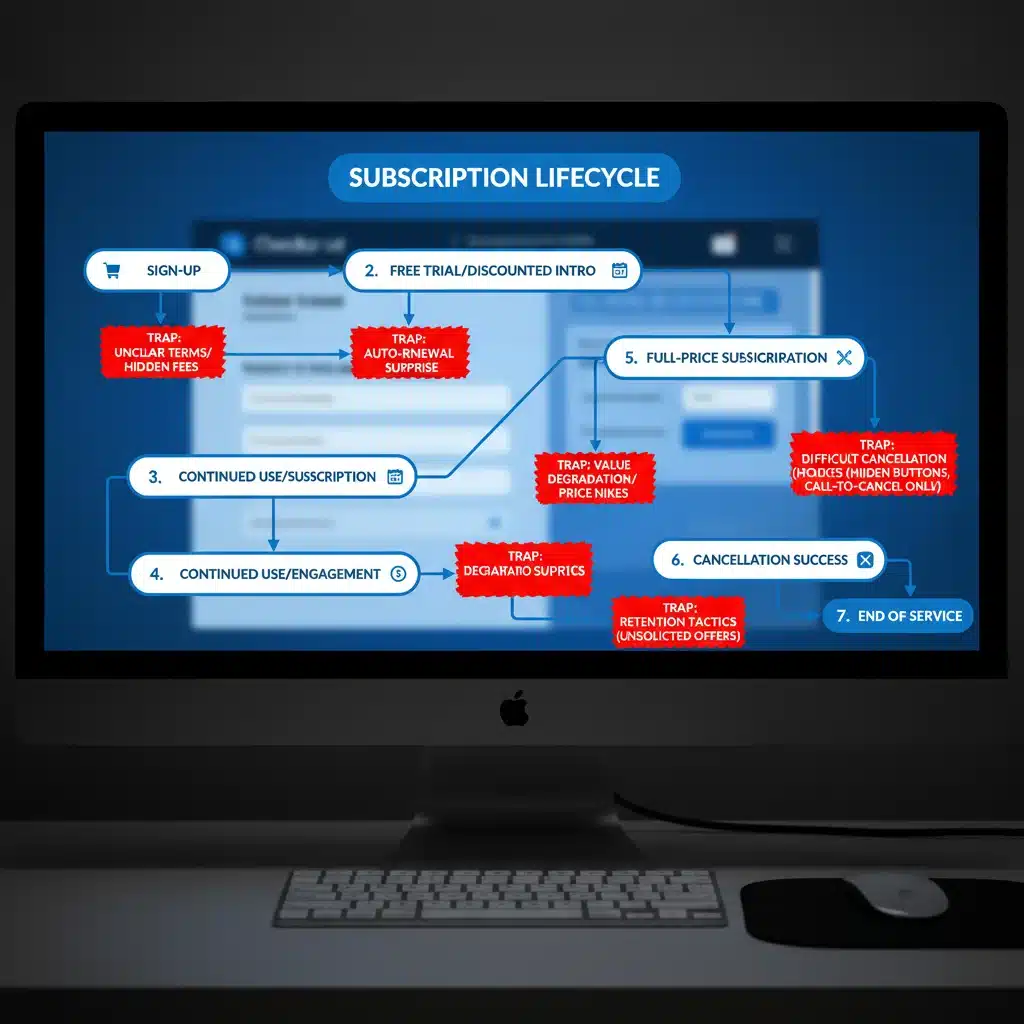
The term "subscription trap" generally refers to business practices designed to make it difficult for consumers to cancel recurring services, or to mislead them into signing up for subscriptions they don’t fully understand or intend to continue. These tactics can range from burying renewal terms in lengthy legal documents to requiring arduous multi-step cancellation procedures, or even making it nearly impossible to find cancellation options online. The financial implications for consumers can be substantial, leading to unwanted charges that accumulate over time, often unnoticed until significant amounts have been debited.
Recognizing the growing problem, lawmakers across the United States have been actively working to establish clearer guidelines and stronger protections. The aim of these subscription trap laws is to ensure transparency, provide easy cancellation mechanisms, and hold companies accountable for deceptive practices. However, the patchwork nature of state-specific legislation means that consumer rights can vary significantly depending on where one resides. Understanding these nuances is crucial for both consumers seeking protection and businesses striving for compliance.
The Evolution of Automatic Renewal Laws: A Historical Context
To fully appreciate the current state of subscription trap laws, it’s helpful to look at their historical development. The concept of automatic renewal isn’t new; magazines and gym memberships have long utilized this model. However, the internet and digital services dramatically amplified its reach and complexity. Early regulations were often insufficient to address the unique challenges posed by online subscriptions, where physical contracts were replaced by click-through agreements and terms of service hidden deep within websites.
California was an early pioneer in this area, enacting its Automatic Renewal Law (ARL) in 2010. This landmark legislation set a precedent by requiring businesses to provide clear and conspicuous disclosure of automatic renewal terms, obtain affirmative consent before charging consumers, and offer an easy-to-use cancellation mechanism. The success of California’s ARL inspired other states to consider similar measures, gradually building a foundation for more robust consumer protections nationwide.
Over the past decade, and particularly leading up to 2026, states have been refining their ARLs, often expanding their scope to cover a wider range of services and imposing stricter penalties for non-compliance. The focus has shifted from merely disclosing terms to ensuring that those terms are truly understood and that the cancellation process is as straightforward as the sign-up process. This evolution reflects a growing recognition that consumers need more than just information; they need actionable rights and accessible recourse when companies engage in predatory practices related to subscription trap laws.
Key Provisions in Modern Subscription Trap Laws (2026 Overview)
While specific requirements vary by state, several core provisions are common across effective subscription trap laws in 2026. These provisions aim to address the most prevalent forms of deception and difficulty consumers face:
- Clear and Conspicuous Disclosure: Businesses must clearly and conspicuously present all material terms of an automatic renewal offer before the consumer agrees to it. This includes the price, frequency of charges, and the fact that the subscription will automatically renew unless cancelled. This disclosure should not be hidden in fine print or behind multiple clicks.
- Affirmative Consent: Consumers must provide affirmative consent to the automatic renewal terms. This often means checking a box specifically acknowledging the recurring charges, rather than having it pre-checked or implied.
- Easy Cancellation Mechanisms: This is a critical component. Laws increasingly require that the cancellation method be at least as easy as the sign-up method. If a consumer can sign up online, they should be able to cancel online, without having to call a customer service line, send a letter, or navigate a convoluted series of menus. Some states even mandate a "one-click" or "two-click" cancellation option for online services.
- Pre-Notification Requirements: Many states now require businesses to send a reminder notice to consumers before an automatic renewal occurs, especially for subscriptions with longer renewal periods (e.g., annual subscriptions). These notices must clearly state the upcoming charge, the renewal date, and instructions on how to cancel.
- Refund Policies: Some laws address situations where consumers are charged after attempting to cancel, or due to a lack of proper disclosure. They may mandate pro-rata refunds or full refunds depending on the circumstances.
- Grace Periods: A few states are exploring or have implemented grace periods, allowing consumers a short window after an unauthorized renewal charge to cancel and receive a full refund.
- Penalties for Non-Compliance: Crucially, these laws include provisions for enforcement, allowing state attorneys general or other regulatory bodies to impose significant fines and penalties on businesses that fail to comply. Consumers may also have the right to private action in some jurisdictions.
- Ambiguity in "Clear and Conspicuous": While laws mandate clear disclosure, what constitutes "clear and conspicuous" can still be open to interpretation. Companies may use small fonts, light colors, or place disclosures in less prominent areas, arguing they are technically "disclosed."
- "Easy Cancellation" Interpretations: The definition of "easy" can also be subjective. Some companies might implement multi-page cancellation flows with repeated prompts to reconsider, which, while technically allowing cancellation, make the process frustrating and time-consuming.
- Trial Period Conversions: Free trials that seamlessly convert into paid subscriptions without adequate reminders or explicit consent remain a significant pain point for consumers, despite being addressed by many subscription trap laws.
- Third-Party Billing: When subscriptions are billed through third-party platforms (e.g., app stores), the lines of responsibility between the service provider and the billing platform can blur, complicating cancellation and refund processes.
- Jurisdictional Challenges: For online services operating across state lines or even internationally, determining which state’s subscription trap laws apply can be complex, especially when the company is based in a state with weaker regulations.
- Enforcement Gaps: Even with strong laws, effective enforcement requires resources and vigilance from state attorneys general and consumer protection agencies. Smaller violations or those affecting a limited number of consumers might go unnoticed or unaddressed.
- Read the Fine Print (Seriously!): Before signing up for any service, especially those offering free trials or low introductory rates, carefully read the terms and conditions. Look specifically for sections on automatic renewal, cancellation policies, and billing cycles.
- Use Virtual Credit Cards: Many banks and financial services offer virtual credit card numbers that can be set with spending limits or expiry dates. This can be an effective way to control recurring charges and prevent unwanted renewals.
- Set Calendar Reminders: If you sign up for a free trial or a short-term subscription you don’t intend to continue, immediately set a calendar reminder a few days before the trial ends or the next billing cycle begins to cancel the service.
- Monitor Bank Statements Regularly: Periodically review your credit card and bank statements for unfamiliar or unexpected recurring charges. Catching these early can save you significant money and make it easier to dispute charges.
- Understand Your State’s Laws: Familiarize yourself with the subscription trap laws in your state. Knowing your rights can empower you when dealing with companies.
- Keep Records: Save screenshots of sign-up pages, terms and conditions, and any correspondence regarding cancellation. This documentation can be invaluable if you need to dispute a charge or file a complaint.
- Use Dedicated Email Addresses: Consider using a secondary email address for signing up for trials or less critical services to keep your primary inbox clear and reduce promotional clutter that might obscure important renewal notices.
- Leverage Consumer Protection Resources: If you encounter a subscription trap, report it to your state’s Attorney General’s office, the FTC, or the Better Business Bureau. Your complaint can contribute to enforcement actions and help other consumers.
- Harmonization of State Laws: As more states adopt similar legislation, there may be a push for greater harmonization or even federal legislation to create a more uniform standard across the country. This would simplify compliance for businesses and provide consistent protection for consumers, regardless of their location.
- AI and Machine Learning in Enforcement: Regulators may increasingly leverage AI and machine learning to identify deceptive practices, analyze terms of service, and detect patterns of consumer complaints related to subscription traps.
- Focus on Dark Patterns: Beyond explicit disclosures, there will likely be a stronger focus on "dark patterns" – user interface designs that trick users into doing things they might not otherwise do, such as making cancellation intentionally difficult. Future subscription trap laws may specifically target these design elements.
- Data Privacy Integration: As subscriptions often involve personal data, future regulations might increasingly intertwine automatic renewal rules with data privacy laws, giving consumers more control over their data upon cancellation.
- Global Cooperation: Given the global nature of many digital services, there may be increased international cooperation to establish common standards for automatic renewals and consumer protections against subscription traps.
- Federal Trade Commission (FTC) Consumer Information: www.ftc.gov
- National Association of Attorneys General (NAAG): www.naag.org
- Consumer Reports: www.consumerreports.org
These provisions collectively form a robust framework designed to empower consumers and deter companies from employing deceptive practices related to subscription trap laws.
State-by-State Comparison of Subscription Trap Laws (2026)
As of 2026, while there’s a general trend towards stronger consumer protections, the specifics of subscription trap laws still vary significantly from state to state. Here’s a comparative look at some key states and their approaches:
California: The Trailblazer’s Continued Influence
California’s ARL remains one of the most comprehensive and influential. It requires clear and conspicuous disclosure, affirmative consent, and an "easy-to-use" cancellation mechanism, which for online services, often means being able to cancel within a few steps. The law also mandates specific pre-renewal notices for subscriptions with terms longer than one month. California’s enforcement has been robust, leading to significant settlements against companies found in violation, further solidifying its role in shaping subscription trap laws nationally.
New York: Expanding Protections
New York has followed California’s lead, strengthening its own automatic renewal laws. Its provisions align closely with California’s regarding disclosure and consent. A notable aspect of New York’s law is its emphasis on clear and conspicuous presentation of the cancellation method. Businesses must provide a "toll-free telephone number, email address, a postal address if the seller directly bills the consumer, or another cost-effective, timely, and easy-to-use mechanism for cancellation." This broad definition aims to ensure accessibility for all consumers.
Illinois: Focus on Online Cancellation
Illinois’s Automatic Renewal Law has evolved to place a strong emphasis on online cancellation for services initially offered online. The law specifies that if an offer is accepted online, the consumer must be able to terminate the automatic renewal exclusively online. This direct correlation between sign-up and cancellation method is a key feature, aimed at preventing companies from forcing consumers into phone calls or other inconvenient methods after an easy online sign-up. This is a critical point when discussing effective subscription trap laws.
Virginia: Detailed Disclosure and Notification
Virginia’s automatic renewal provisions are also quite stringent, requiring businesses to clearly and conspicuously disclose the automatic renewal offer terms, including cancellation policy, and to obtain affirmative consent. A key feature is the requirement for a pre-notification to consumers before a renewal charge, particularly if the renewal term is for one year or more. This notification must include information on how to cancel, providing consumers with a timely opportunity to opt out before being charged again. Virginia’s approach adds another layer of protection to the overall landscape of subscription trap laws.
Federal Efforts and the FTC
Beyond state laws, the Federal Trade Commission (FTC) plays a significant role through its enforcement powers under the FTC Act, which prohibits unfair or deceptive acts or practices. The FTC has actively pursued companies engaging in subscription traps, leveraging its authority to secure consumer refunds and impose civil penalties. While there isn’t a single federal automatic renewal law akin to state statutes, the FTC’s "Negative Option Rule" (which covers schemes where the seller interprets a consumer’s failure to act as assent to purchase) and its broader consumer protection mandate serve as a crucial federal backstop. The FTC’s actions often complement state subscription trap laws, ensuring a broader reach of consumer protection.
Common Challenges and Loopholes in Subscription Trap Laws
Despite the progress, the battle against subscription traps is ongoing. Businesses continuously seek ways to optimize their conversion and retention funnels, sometimes pushing the boundaries of what is legally permissible. Common challenges and potential loopholes in current subscription trap laws include:
Best Practices for Consumers to Avoid Subscription Traps
While subscription trap laws offer vital protection, consumers also have a crucial role to play in safeguarding themselves. Here are some best practices:

The Future of Subscription Trap Laws: What to Expect Post-2026
The trend towards stronger consumer protections is likely to continue beyond 2026. Several areas are ripe for further development in subscription trap laws:
Conclusion: Empowering Consumers in a Subscription Economy
The digital economy thrives on convenience, and subscription services embody this perfectly. However, this convenience must not come at the cost of consumer autonomy and financial well-being. The evolving landscape of subscription trap laws in 2026 reflects a concerted effort by states and federal agencies to strike a balance between legitimate business practices and robust consumer protection. While significant strides have been made, continuous vigilance from both lawmakers and consumers remains essential.
By understanding their rights, practicing smart subscription management, and advocating for stronger regulations, consumers can navigate the subscription economy with confidence. For businesses, compliance with these evolving laws is not just a legal obligation but also an opportunity to build trust and foster long-term customer relationships. As we look ahead, the goal remains clear: to ensure that automatic renewals serve as a convenience, not a trap, for everyone involved.
Additional Resources:
